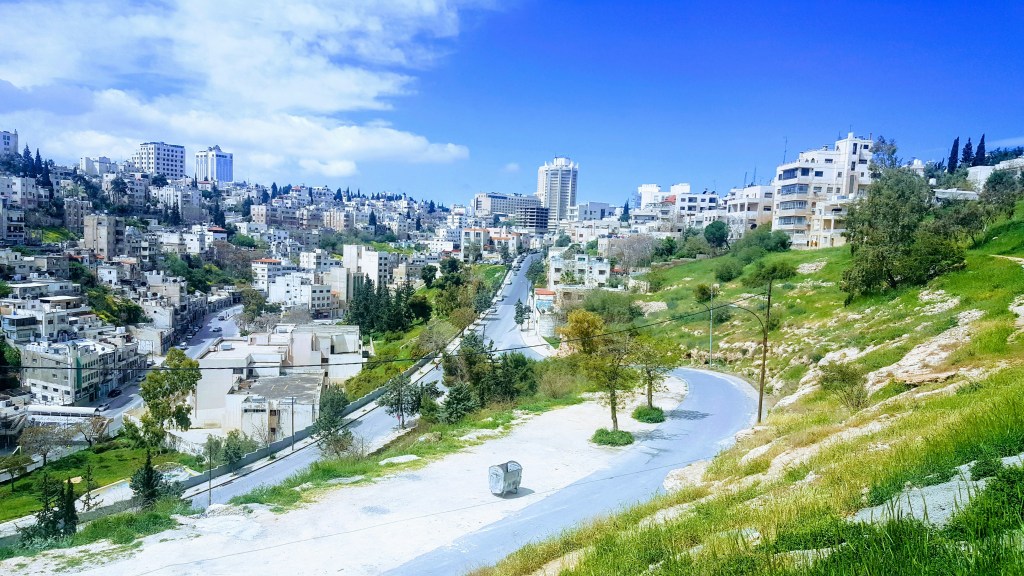
Ancient, Biblical and Classical Amman
Like most cities in this region and across the Fertile Crescent, people have lived in these valleys since the Stone Age, around 1.5 million years ago. Within the last decade, the oldest evidence of bread, made with flour from gathered wild cereals and tubers, was excavated from a site known as Shubayqa located north east of Jordan, occupied between 14,600 and 12,000 years ago.
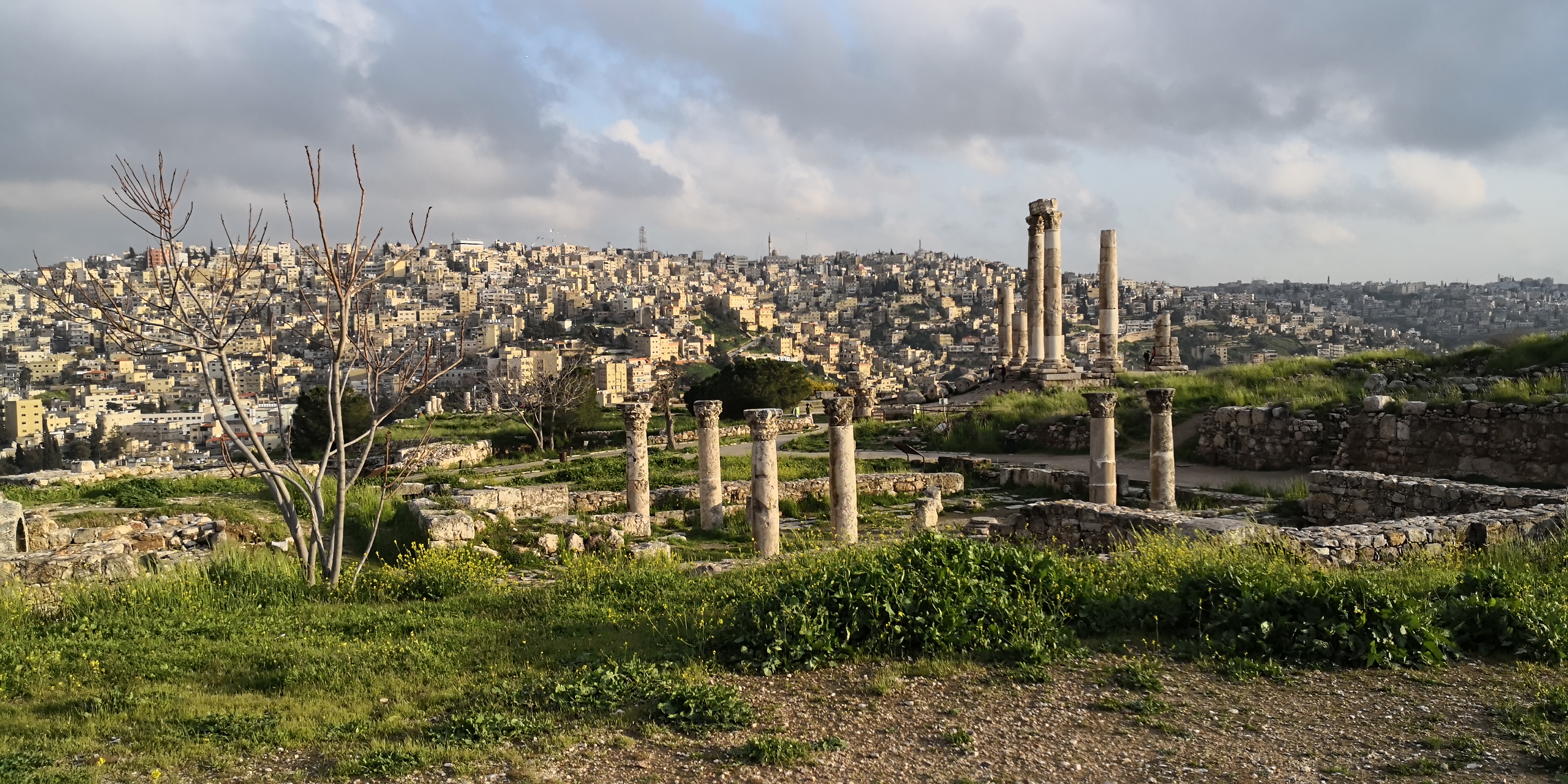
In the heart of what’s now metropolitan Amman, the Neolithic settlement of ‘Ain Ghazal was part of the late-Stone Age Agricultural Revolution, some of the early evidence of cultivated crops and shepherding alongside hunter-gatherer foods, as well as new kinds of tools and new uses for plaster and clay. In addition to early pottery, ‘Ain Ghazal produced some of the earliest human figurines. In the Bronze Age, Amman’s Citadel Hill was also a center of settlement. If you ever find yourself in Amman, I highly recommend visiting the new Jordan Museum to see the ‘Ain Ghazal statuettes and much more about the ancient and classical periods of Amman.
During the Iron Age, Amman was known as “Rabbath-Ammon” and was the capital of the Ammonite Kingdom, derided as “odious” in Samuel 10:6 and given by Moses to the tribe of Gad in Joshua 13:25. In the third century BCE, the pharaoh of the Ptolemaic Egypt empire, Ptolemy II Philadelphus, son of Alexander the Great’s general, occupied the settlement here and renamed it Philadelphia. The City of Brotherly Love thrived in the Greco-Roman Classical Period as one of the Decapolis cities, an alliance of approximately ten cities, sometimes more, sometimes fewer, who collaborated to provide mutual security that allowed trade and travel to flourish across the Levant. Decapolis-era Amman/Philadelphia was known for being built on seven hills.
Modern Amman
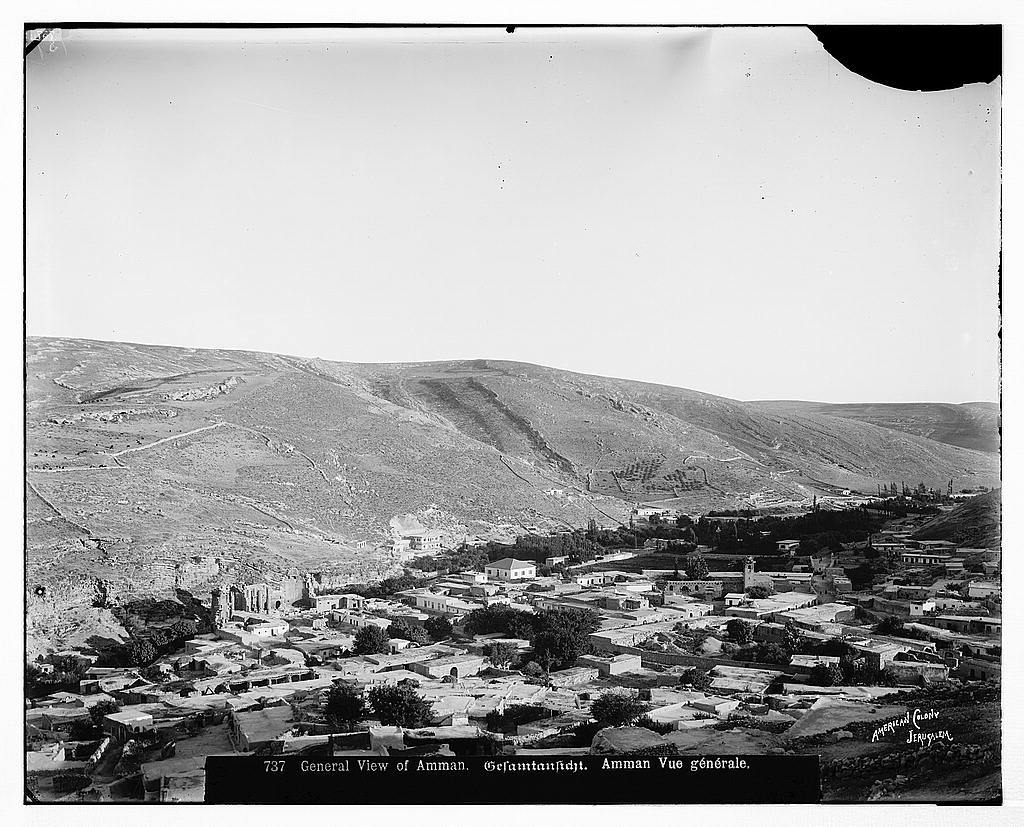
Skipping forward over the Christian, Byzantine, Sassanian (Persian) and Islamic caliphate periods of Amman, the “modern” city traces its origins to the Ottoman Empire, which resettled a colony of Circassian emigrants there in 1878 who were fleeing Tsarist Russian expulsion and genocide of Muslim communities. Many persecuted groups found refuge in this region during the Ottoman period – Armenian, Assyrian, Chechan, Turkmen – and these ethnic minorities still thrive across contemporary Jordan.
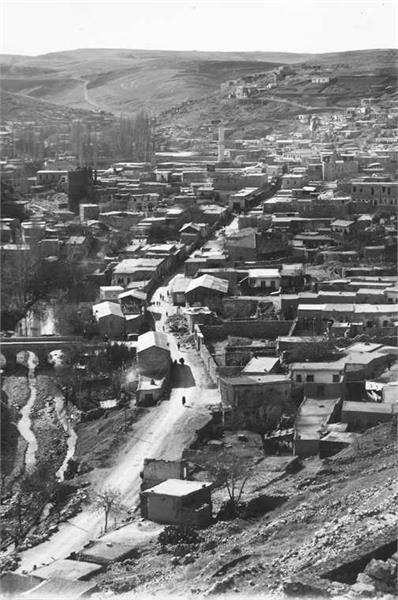
Ottoman Amman remained a small town, a largely agricultural community of several thousand, mud brick houses hugging the ruins of the Roman theater, as well as a Kurdish neighborhood.
The French Dominican priest Marie-Joseph Lagrange commented in 1890 about Amman: “A mosque, the ancient bridges, all that jumbled with the houses of the Circassians gives Amman a remarkable physiognomy.”
This began to change when the Ottomans constructed the Hijaz Railway through the town of Amman on its way from Damascus in Syria to the north to Mecca in Saudi Arabia to the south. Still, it remained a small town until 1921, in the British-controlled Palestine Mandate period, when the newly installed Hashemite emir and later king Abdullah I designated Amman to be his capital, and constructed Raghadan Palace on a hillside overlooking the Circassian community.
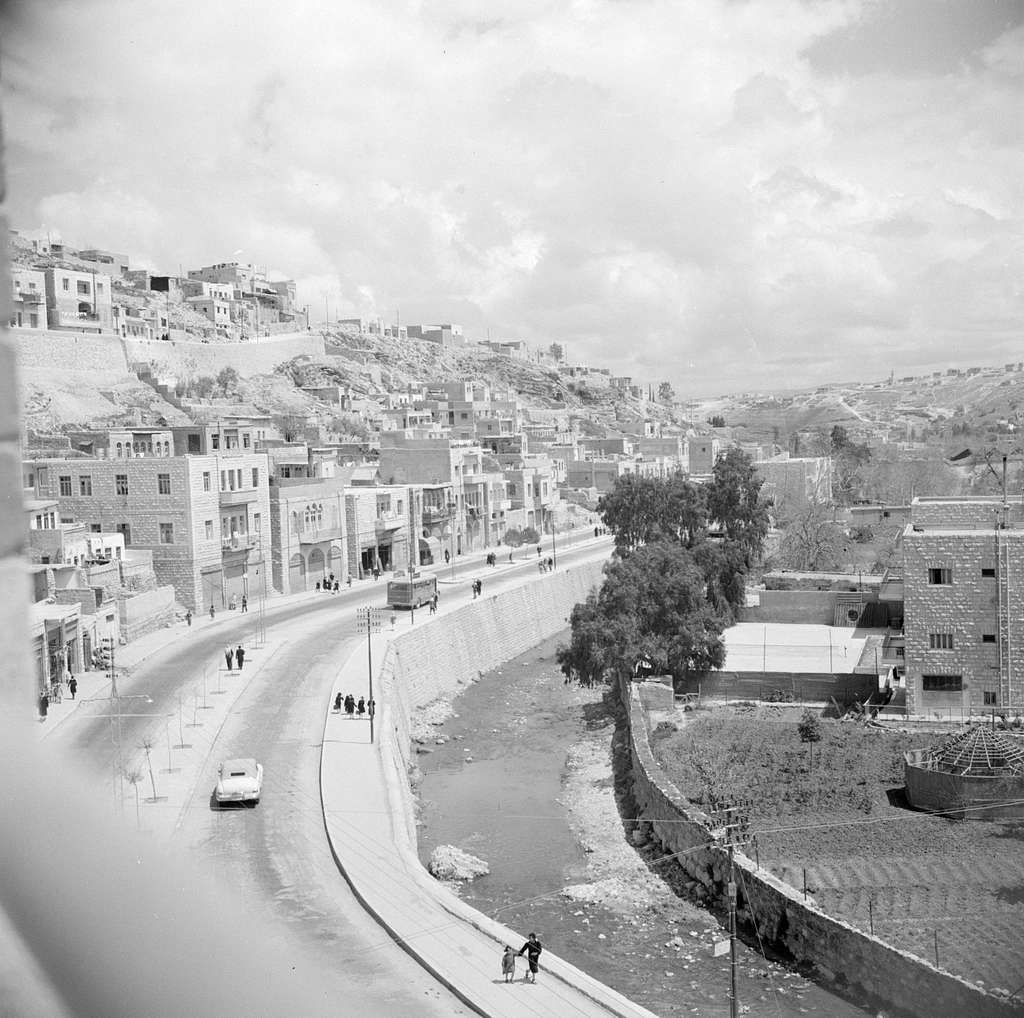
As the new seat of government, the city began rapid growth, supercharged by the 1948 and 1967 expulsions of hundreds of thousands of Palestinians from Israel. More than half the population of Jordan lives in Amman today, over 4 million in 2021, and despite its admixture of refugees from the Caucuses, Anatolia, and now Iraq and Syria, Amman is a predominantly Palestinian city.
The 2011 Arab Spring also accelerated an already accelerating shift of many regional nonprofits and study abroad organization moving their primary or sole operations from Cairo and Beirut to Amman, Jordan. Amidst its volatile neighbors, Jordan had become seen as an island of unusual stability in the Mashriq (the Arab Eastern Mediterranean), a secure center for government and charitable organizations reaching out to vulnerable communities in unstable Iraq, Syria, Egypt and, to some extent, the Palestinian Territories. At the same time, floods of Iraqi and then Syrian refugees demanded the presence of the United Nations and organizations in its orbit. I also often heard in those days from expats, especially Western women, who appreciated a more liberal, comfortable atmosphere with less harassment based on gender or foreign status.
Seven Hills of Old Amman
Jordanians will proudly declare to you that the original city of Amman was built on seven hills (in Arabic: jabal), just like Rome and Jerusalem. I’m not sure how true that is – seven is recurring theme in Jordan, such as the seven Bedouin tribes that supported King Abdullah I’s installation as sovereign, represented by the seven-pointed star that distinguishes the Jordanian flag from the Palestinian or Arab Revolt flags. In any case, “jabal” is used to designate several of Amman’s oldest neighborhoods, often organized around a central traffic circle, including Jabal Amman, Jabal Luweibdeh or Weibdeh, Jabal Hussein, and Citadel Hill where the Ottoman castle, a Byzantine basilica, and remains of the Temple of Hercules stand out on the hilltop.
Jabal Amman

Starting in the 1920s, soon after the king came to Amman, prominent political and economic figures came to the heights of Jabal Amman to build their palaces and villas, with lush gardens and views across the hills and wadis (arroyos) surrounding the little Circassian town at the foot of Jabal Amman. Many of those spacious homes remain in the hands of the same families that built them, making Jabal Amman a neighborhood lush with trees inside walled gardens. Other of those old homes have over the years become home to the Jordan River Foundation, the Jordan Film Commission, the British Council and other cultural institutions. This, in turn, attracted newer construction such as the gorgeous Wild Jordan building perched on the edge of the hill, a restaurant and fair trade store that highlights the best of ecotourism across Jordan, built with the support of USAID and the American people.
The heart of Jabal Amman is Rainbow Street, starting from Amman’s First Circle and extending into Mango Street. Named for the Rainbow Theater, the first color cinema in Jordan, Rainbow Street bustles cheek-to-jowl with restaurants and bars, art galleries and tourist shops, popular with study abroad students and other European and North American expats as well as Jordanians. If you’re in Jabal Amman on a Friday, the Muslim day of rest, you shouldn’t miss Souk Jara, and open-air artisan market.
I spent a lot of time in and around Rainbow Street in the early 2000s, met a lot of my friends in its cafes and bars, eventually came to appreciate that this neighborhood I loved was also the heart of Amman’s “gay-borhood.” And when I wasn’t in Jabal Amman, I was in Jordan’s other expat center, Jabal Weibdeh.
Jabal Weibdeh
Properly, this hill is called Jabal Al-Luweibdeh in Arabic, related in some way to the idea of refuge, but colloquially it is often referred to just as Weibdeh. Just north of Jabal Amman and built up around the same period, it is also a neighborhood of old homes with gardens, originally settled by a disproportionately Christian Jordanian population, and now also popular with European and North American expats. Here, too, are restaurants and art galleries, more cafes than bars, and the French Cultural Center, which I came to know years ago as the first institution in Amman to offer classes in the local Jordanian Arabic dialect rather than the stiff, formal Modern Standard Arabic.
The last time I lived in Amman, I told myself that next time, I would live in Jabal Weibdeh, and now I have fulfilled that promise. I’m looking forward to exploring this new neighborhood over the next nine months.


Leave a comment