Traditional Arab cultures are tribally-based, in which your tribal affiliation provides your community, and your communal support. In the modern context, these blood-relation tribes still play a prominent role. In Jordanian elections, for example, tribal affiliation seems to be a strong predictor of voter behavior. Other kinds of affiliation are equally important to succeed here.
In Arabic, we call this wasta. Literally, it means “connections,” but when we talk about wasta culture, we mean that your personal relationships enable your success in both professional and personal contexts.

Wasta facilitates everything. In a country like Jordan where youth unemployment is over 60%, your university diploma is secondary to who you know. When my neighbor in my Jordanian village got substitute teaching work, it was because her sister-in-law’s cousin’s neighbor found out about an opening, and my friend strolled up the street to have tea with the school headmistress and requested the position. You get a job in Jordan’s corporate world because your friend’s cousin has a job in that company; since most Jordanians of Palestinian origin were blocked from government jobs after Black September 1971, the corporate world is dominated by Palestinian-owned companies. A culture of wasta means most of their employees will be Palestinian, too. Meanwhile, so-called “East Bank” Jordanians work in the public sector – government, military, police – but they, too, rely heavily on wasta, a cousin’s friend’s father who knows about a job opening.
When I was studying in Egypt, one of our professors described the process of getting his Egyptian drivers license. He was well into his thirties at this point, in part because the process is so arduous and expensive, when he went down to the labyrinthine government building on Tahrir Square known as the Mogamma – for more about the Kafka-esque Mogamma, I recommend the classic Egyptian film from the 1990s, “Terrorism and Kebab.” When he had finally made it to the right office, and then to the front of the line, he presented all his painstakingly collected paperwork to the government employee behind the desk. “But I didn’t have wasta,” my professor explained, “so it was clear that he was not going to give me my license. That’s when I reached into my pocket, pulled out twenty guineas, and casually let it flutter to the floor. ‘Excuse me, sir,’ I said, ‘but I believe you dropped this….’” Because if you don’t have wasta, you need a lot of money for bribes.

Village Favors
As a Peace Corps Volunteer, I relied on my wasta in a thousand small ways. My connections with neighbors and school colleagues got me invitations to dinner across the community, trips to picnic in the Irbid wildflowers, or to accompany the fifth graders I didn’t teach on their annual school field trip. Wasta furnished my house, saved me from walking the 4 km commute to school most mornings, and took me to countless strangers’ weddings.
My wasta also kept me safe. Sometimes when I was waiting for a bus, someone would stop and offer me a ride who knew me by name, and I trusted that my connections to the headmistress, the most powerful woman in the community, would guarantee that no harm came to me. When a stalker threatened to come to my house, I called the Peace Corps security officer, who leaned on his connections in the secret police to come out to interview me at my house, and later to arrest the perpetrator. After they concluded their interview in the front yard of my village house, the teenage boy next door came over to find out what had happened. “Why didn’t you just tell him to come on over? We would have taken care of it!” he exclaimed, thrusting his fist into his open palm.
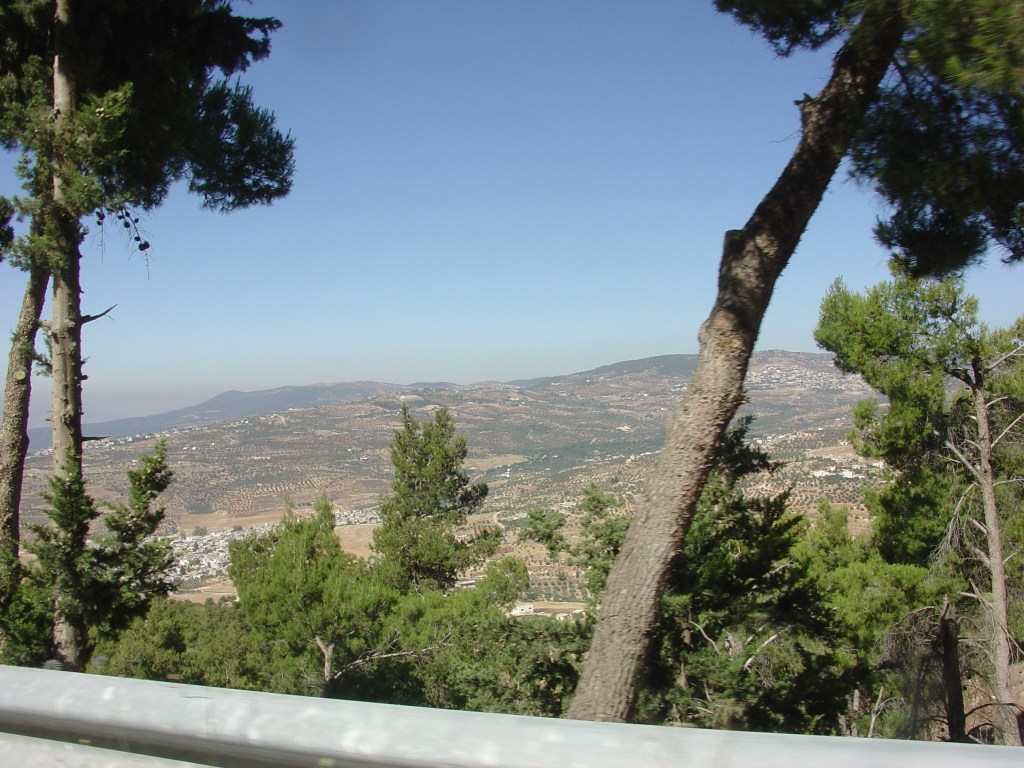
Sometimes it manifested in even more subtle ways. I was often asked how I had learned to speak Jordanian Arabic with such an authentic accent. When I told people that I had learned my Arabic in a small northern village near Gafgafa – infamous for its prison hulking on a hilltop over the highway – other Bedouin at the far opposite end of the kingdom would say, “Ah, the Bani Hassan,” naming the tribe of both Gafgafa and my village, and offer me local Jordanian rates, sometimes even deeper discounts and other perks.
In Peace Corps, we also complained a lot about wasta culture, how capability was overshadowed by connections, how wasta could facilitate incompetence rising to the top of organizations, how it was really nepotism and corruption and hindered a merit-based system of advancement.
But I’m also an elder Millennial who has graduated into a recession three times, and am now looking down the barrel of a fourth at the end of this dissertation. In a recession job market, again, it’s all about the wasta. In my 10 years working in New York City, every job I got was through wasta – mostly Peace Corps connections, but also through church. Only, we don’t call it wasta in America, because that’s unsavory; we say, “It’s all about who you know.”
Wasta and the IRB
Research done by institutions that receive federal funding, like hospitals and universities, and that involves human subjects, requires approval from the Institutional Review Board, the dreaded IRB process. These approvals are important, what we call in summer camp “rules written in blood,” or implemented after something awful happened. The IRB process safeguards against such ethical horrors as the Stanford Prison Experiment or the Tuskeegee Syphilis Study, and especially against the exploitation of vulnerable populations like incarcerated or disabled people, Native Americans, or children.
Explain the recruitment process. Describe how potential subjects will be identified, where recruitment will take place, when recruitment will occur, and the methods that will be used to recruit individuals.
A standard part of the IRB application includes a description of how you’ll recruit the subjects for your study, including the wording of any recruitment materials. In a past IRB application, for example, we had attached the exact text of emails and social media posts we would be using to ask people to take our survey.
In the case of my dissertation research IRB, I really wanted to answer this question with one word: “Wasta.”
Instead, I went with this:
In the village in rural Jordan where I lived as a Peace Corps Volunteer, my former teacher has offered to help me recruit families in the community by word of mouth…. Jordanian culture is built on kinship and personal ties, and my experience living there tells me that the best way to recruit subjects will be through word-of-mouth, with my personal and academic connections vouching for me through their networks.
This confused the IRB. They wanted to see my social media posts and recruitment emails, and scripts for the phone calls I’d be making. I had to explain that this was actual old-fashioned word-of-mouth: I would tell someone, who would tell someone, who would let me know they wanted to participate. No flyers, no emails, no social media. In the end, it was approved.
Wasta aged like fine wine
I thought that my institutional connections and the networks of expats, academics, former Fulbrighters and other Amman friends would be my way in the door. For last summer’s pilot study, these had been the most productive sources of recruitment. Instead, it turned out that, like in Manhattan, all I really needed was Peace Corps.
Hard as it is to believe, it’s been almost nineteen years since I separated from my Peace Corps service, more than twenty-one years since I was a Peace Corps Trainee, half my lifetime ago. I knew that my best friend from my Peace Corps community would coordinate the rural toddlers in my study, but it seemed unreasonable to think that decades-old relationships would support my recruitment of urban toddlers, too.
Still, as I was getting my bearings in Amman in March, I reached out to some old Peace Corps contacts, including our training director Lana.
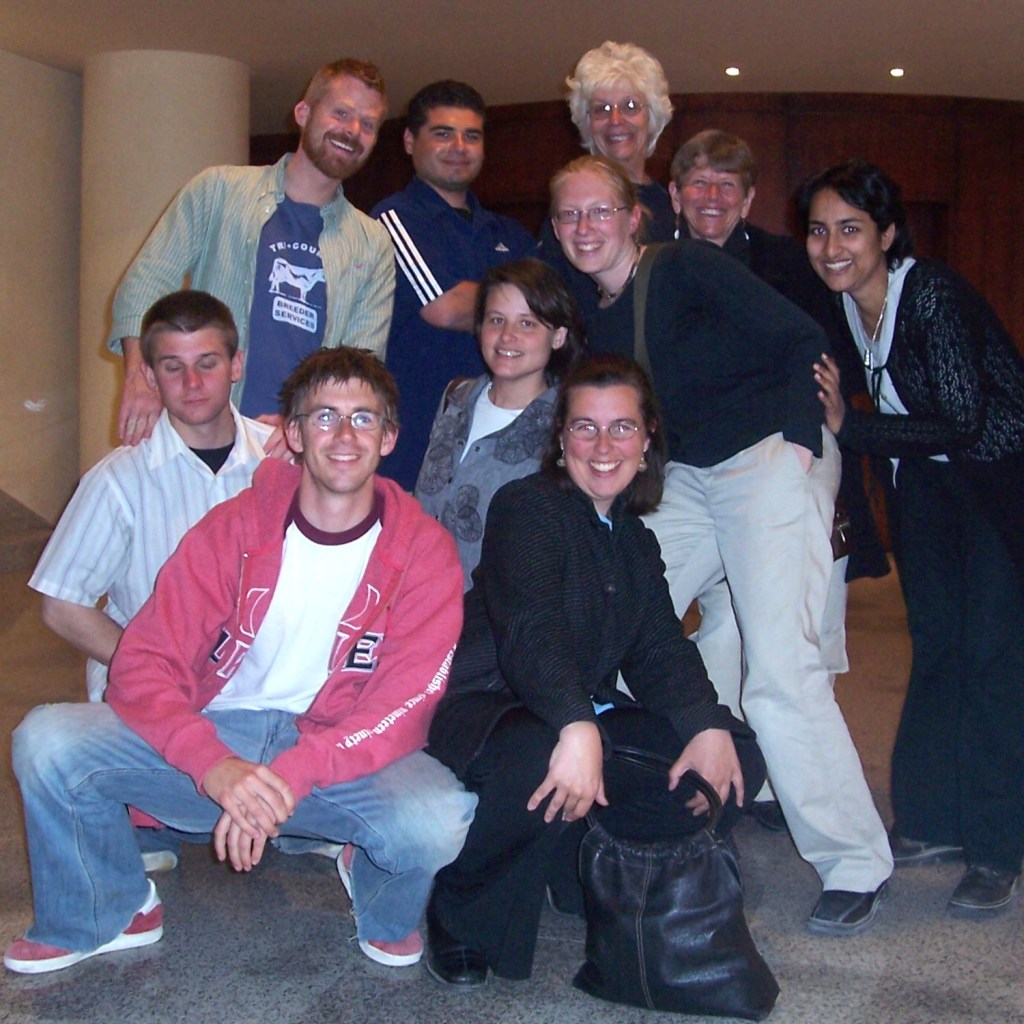
Our Peace Corps Training was based in the Madaba Governorate. The original 25 members of our J7 cohort, Jordan’s seventh cohort of Peace Corps Volunteers and the first to return after Jordan had been evacuated in the run-up to the 2003 invasion of Iraq, were divided between five villages surrounding the small Jordanian city of Madaba. We did most of our training in those villages, but approximately twice a week, we gathered at a central location in Madaba. There, it was Lana’s responsibility to greet us and give us the agenda for the day.
It was also Lana’s responsibility to update us about any of our colleagues who had decided (or been told) that the Peace Corps Jordan experience was not the right one for them. There were so many early terminations during our training that, on those Madaba mornings, we would see Lana coming and sigh together, “Who’s leaving this time?” Less than twenty of us made it to swearing in that April, and by the end of our two years of service, there were only ten J7s left.
Lana Comes Through
It was poor planning on my part to arrive in Jordan two days before the holy Muslim month of Ramadan. Nearly everyone I initially reached out to meet with all said to me, “After the Eid,” the celebration marking the end of Ramadan.
Ramadan is a month best known for abstaining from food, drink, cigarettes, sex, arguing and unkind thoughts from first light till the sun touches the horizon in the evening. Among Muslims, however, Ramadan is also known as a month of feasting, from sunset iftar to suhoor in the wee hours of the morning. In the first week, the hardest part of Ramadan, you break fast with close family, and then extended family in the second week. After that, the iftar feasts with professional colleagues and social organizations. When the first sliver of the new moon is sighted after the twenty-eighth day of fasting, Eid al-Fitr, the Feast of Fast-breaking, three days of day and night feasting.
Lana and I met for lunch, and to catch each other up on two decades of our own lives, and all the other Peace Corps folks we are still in touch with – Jordanian staff here, a Returned Peace Corps Volunteer (RPCV) doing a Masters right here at Jordan University, a Foreign Service Officer coming back to Jordan later this year, other RPCVs who might be passing through in the next few months.
We also talked about the effects of Trump’s USAID cuts. More than 35,000 Jordanians lost their jobs as a result of zeroing out Jordan’s funding, including Lana. Her education project had just become self-sustaining, and looks likely to continue without its USAID team, but many others will not be so lucky.
But one of the things I love the most about Jordanians is how cleanly they distinguish between governments and their people. When I lived in England during the administration of Bush the Younger, while he was ranting about who was “with us or against us” and gearing up to attack the Middle East, Brits would ask, “How can you let him do this?” A few years later, when Bush won re-election and it put me into weeks-long depression, my Jordanian neighbor asked, “Why does it bother you so much? It has nothing to do with you.”
So, despite my government wrecking Lana’s life, by the end of our lunch she said she had at least four toddlers in mind who would be perfect for my study.
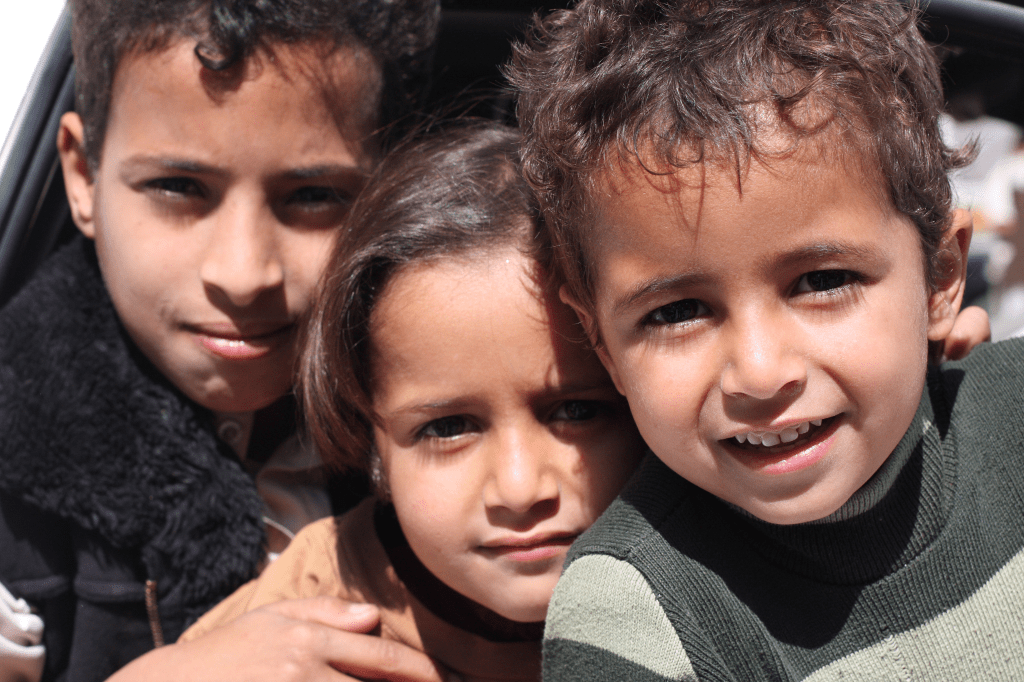
By the end of this week, I will have had the first interviews with twelve children, eight from the village and four here in Amman, all but one of them found through my twenty-year-old Peace Corps wasta!
 MaryahConverse.com
Leave a comment