Jordan’s greatest treasures are its history and archaeological wonders, its natural beauty and variety, and the extraordinary generosity and care of its people. It has, aside from potash and Dead Sea products, effectively no extractable resources. Tourism has been an important site of development and wealth for Jordan nearly throughout its 70-plus years with more or less the borders of today, and in the last 25 years, a lot of that development effort has focused on sustainable ecotourism. One such project is the Jordan Trail.
Jordan Trail
When I was in high school, my Girl Scout troop decided to take up backpacking. Once a month, we filled our packs and got out on the Appalachian Trail. The Pennsylvania and Maryland sections of the trail are not too strenuous, and we took a leisurely pace of not more than ten miles a day, but it was an undertaking of persistence. I started to read about so-called “through-hikers,” from the first woman Grandma Gatewood in 1955, to the comedian Bill Bryson. Through-hikers traverse the 2,100 miles over the best part of a year, starting from Georgia in late winter, and arriving at Mount Katahdin in Maine before the snow sets in. They say that even if you’re not in particularly good shape in Georgia, you will be by Virginia. Ever since, there’s been a dream in the back of my mind that someday I’ll take a year off and through-hike the AT.
There are long trails like these in many places: the Pacific Crest Trail made famous by Cheryl Strayed’s memoir Wild, the Inca Trail in Peru that culminates at Machu Picchu, the Camino de Santiago pilgrimage across northern Spain, the European long-distance footpaths, and in development for the last decade (with the support of USAID):
the Jordan Trail, from Umm Qais to the Red Sea
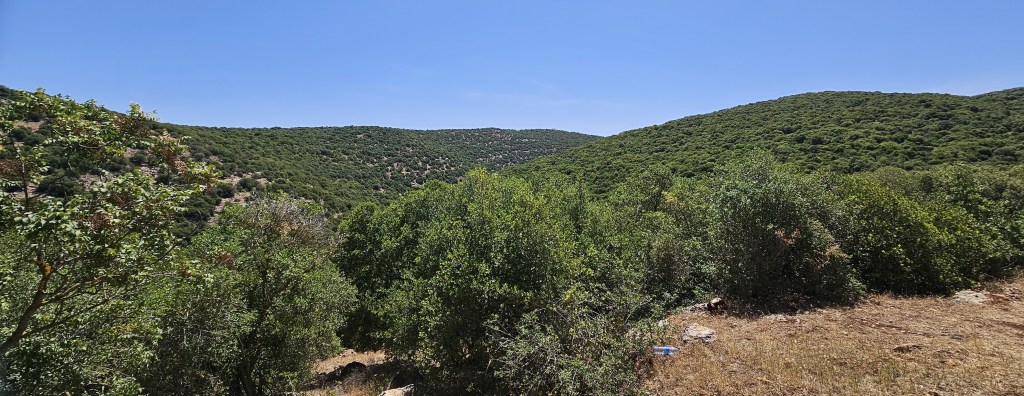
Today we hiked a small segment of the Jordan Trail section in Wadi Zubia between Beit Idis and Rasoun in the governorate of Ajlun in the high altitude of the north.

Zubia Forest
The Zubia village of farmers and herders dates back at least to 1596 tax records from the Ottoman Empire. The Zubia Reserve today covers rolling hills of evergreen oak, wild pistachio and Greek strawberry trees.
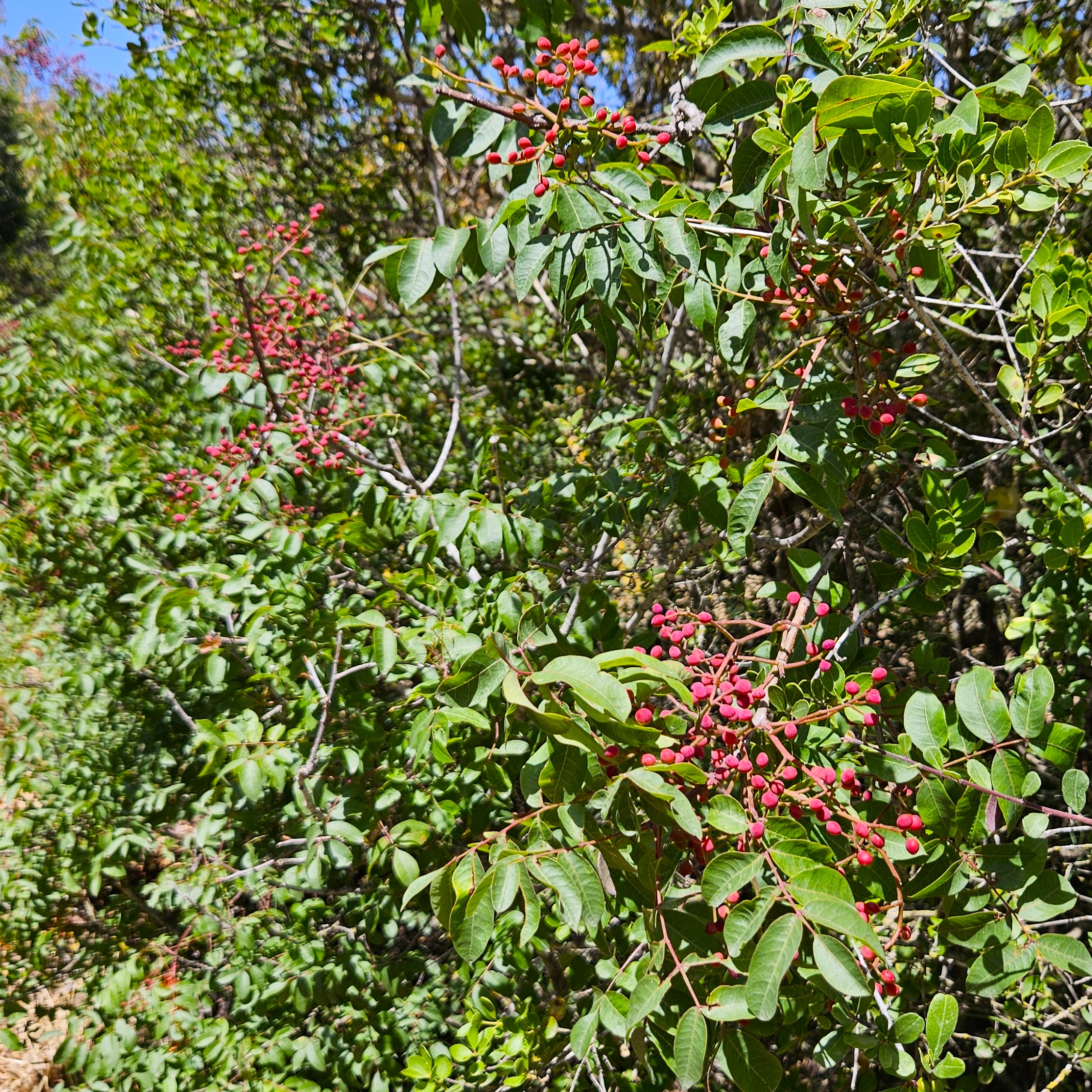
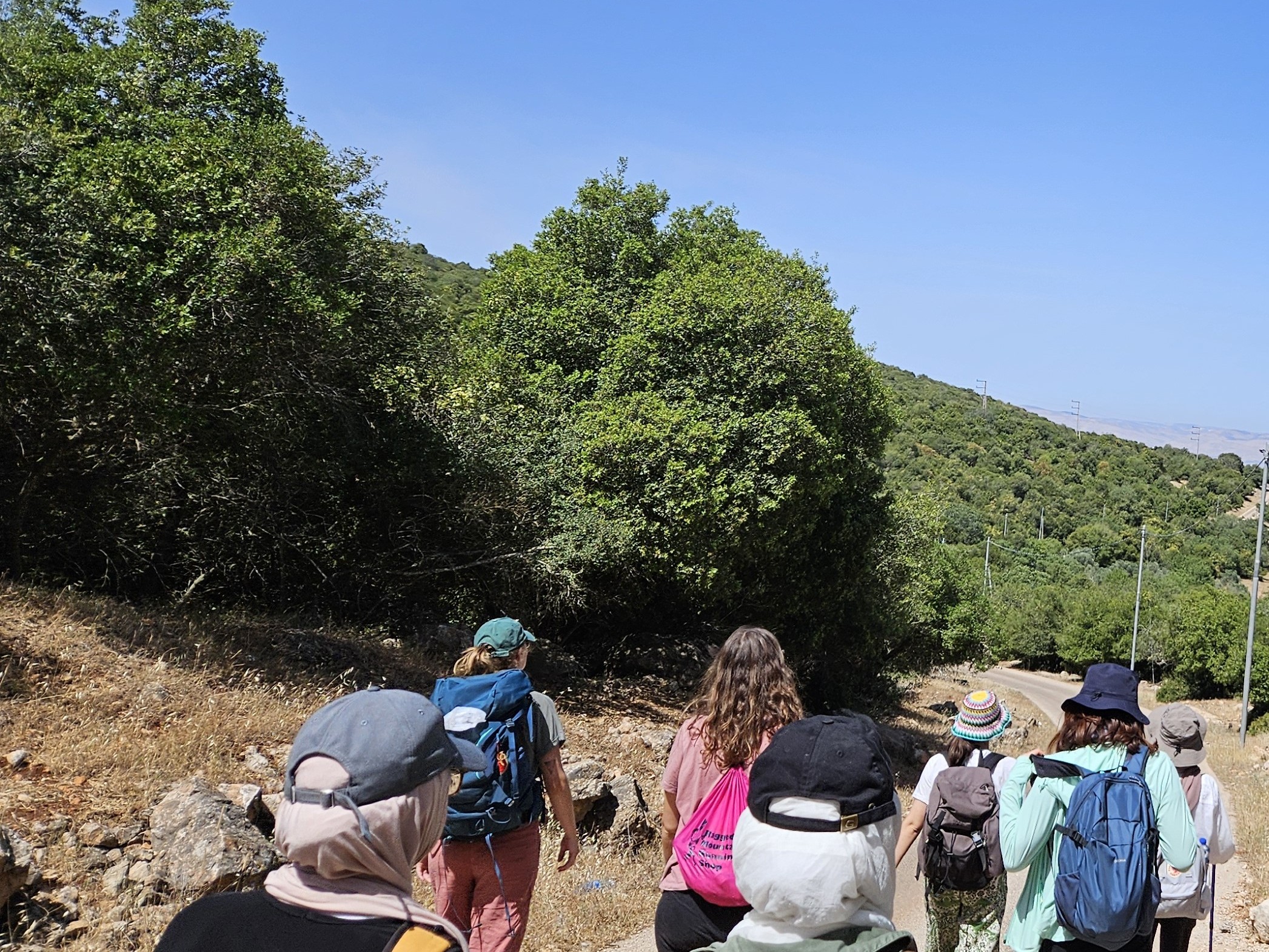
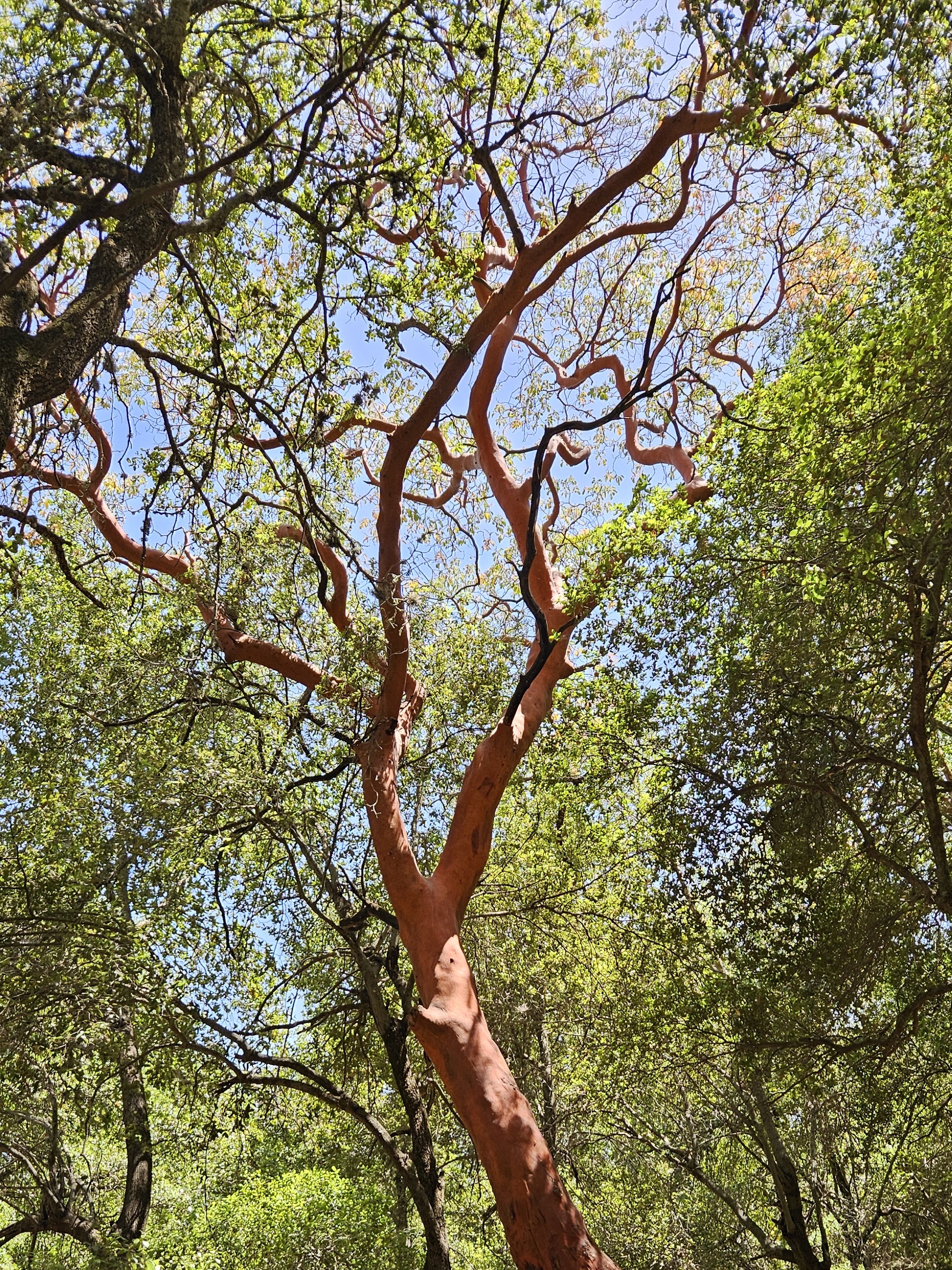
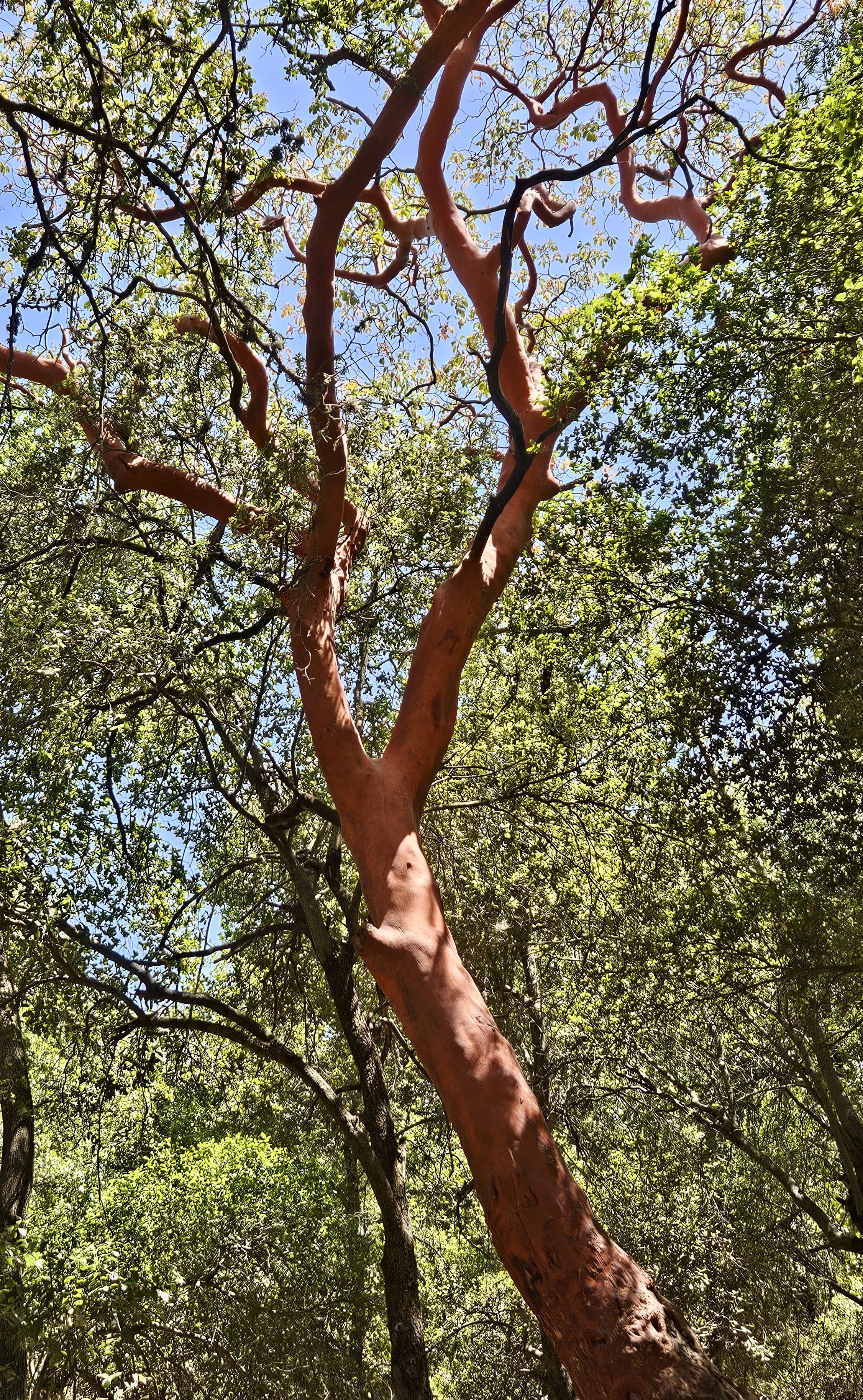
Our hike took us quickly down into the valley, and into the cooler air under the trees as the hot season in Jordan is beginning to heat up. Though I tried not to slow the group down too much, I had plenty of opportunities to live into the reputation I’ve earned with the RSCN – the girl who takes a picture of every flower she passes, at least the ones that I hadn’t seen on the RSCN hike in Ajlun that earned me that reputation….

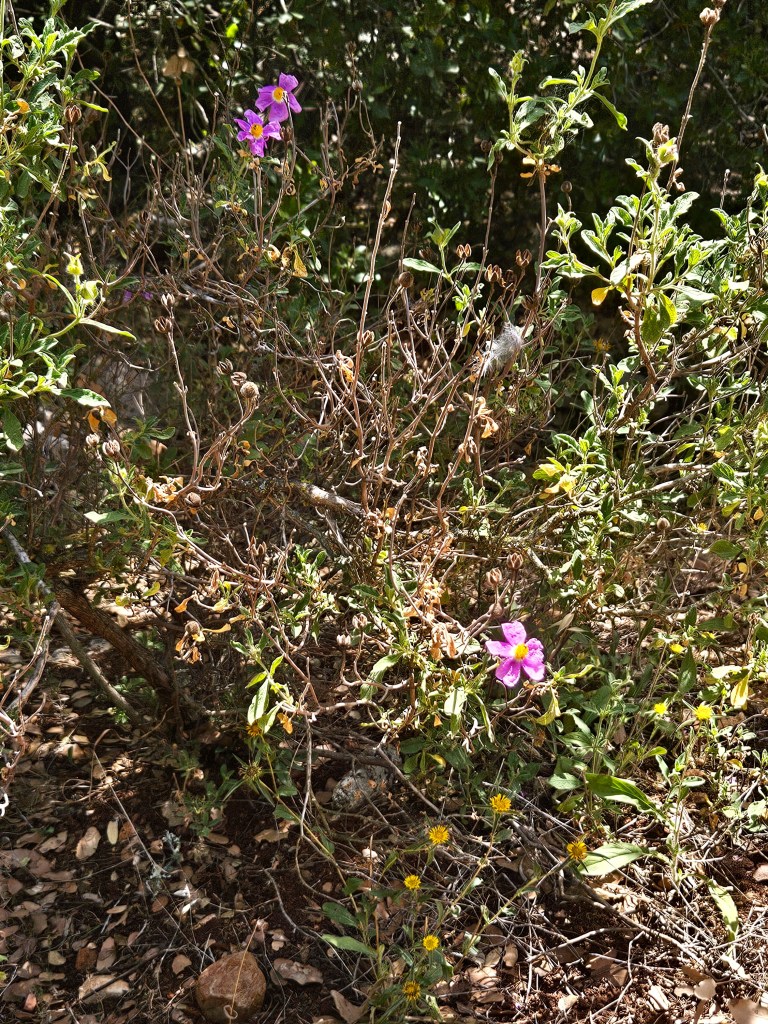
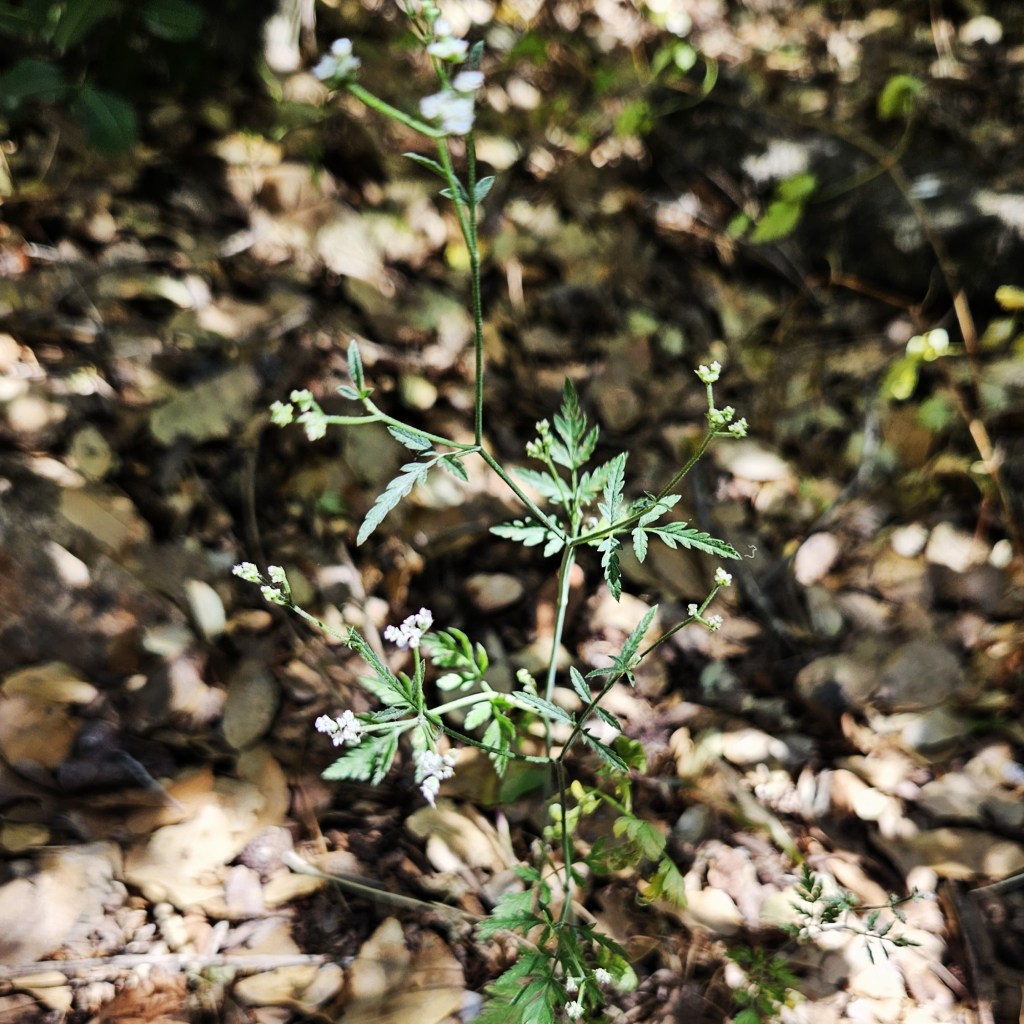
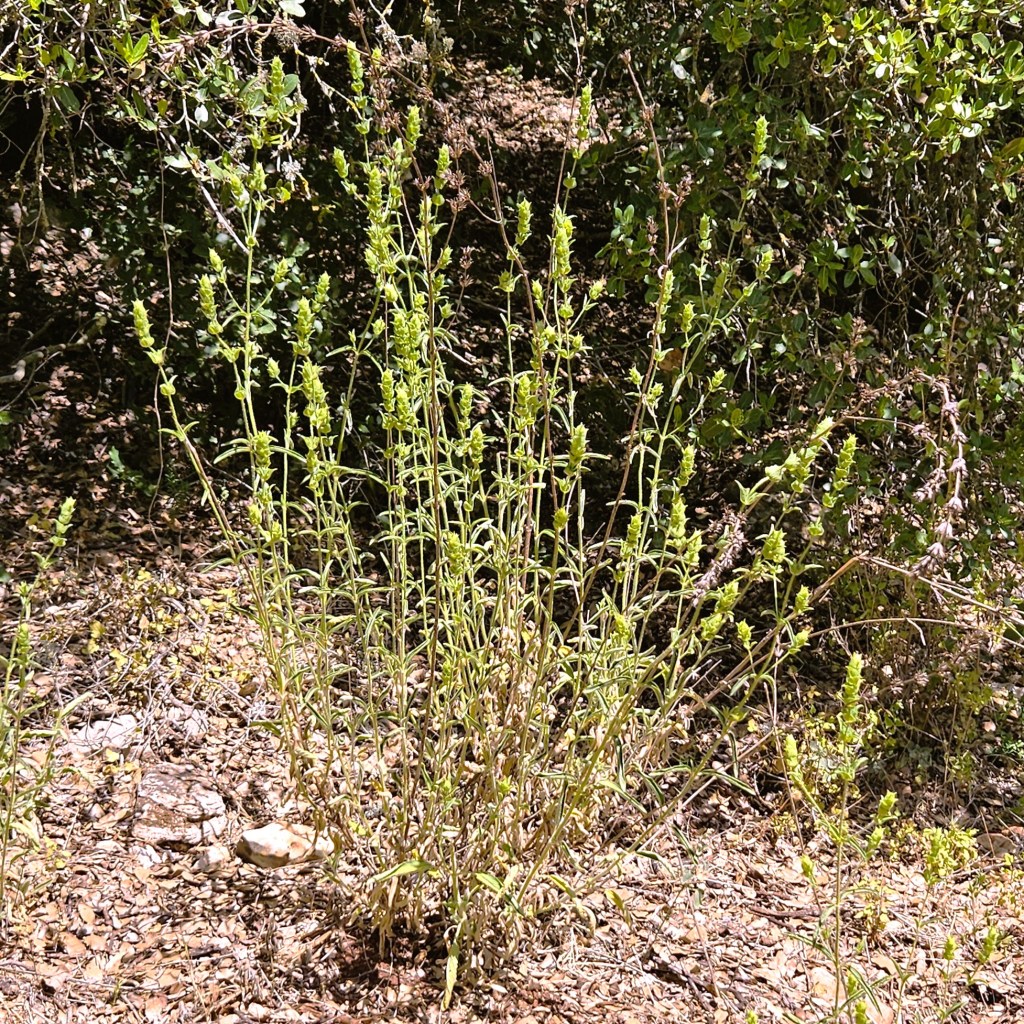
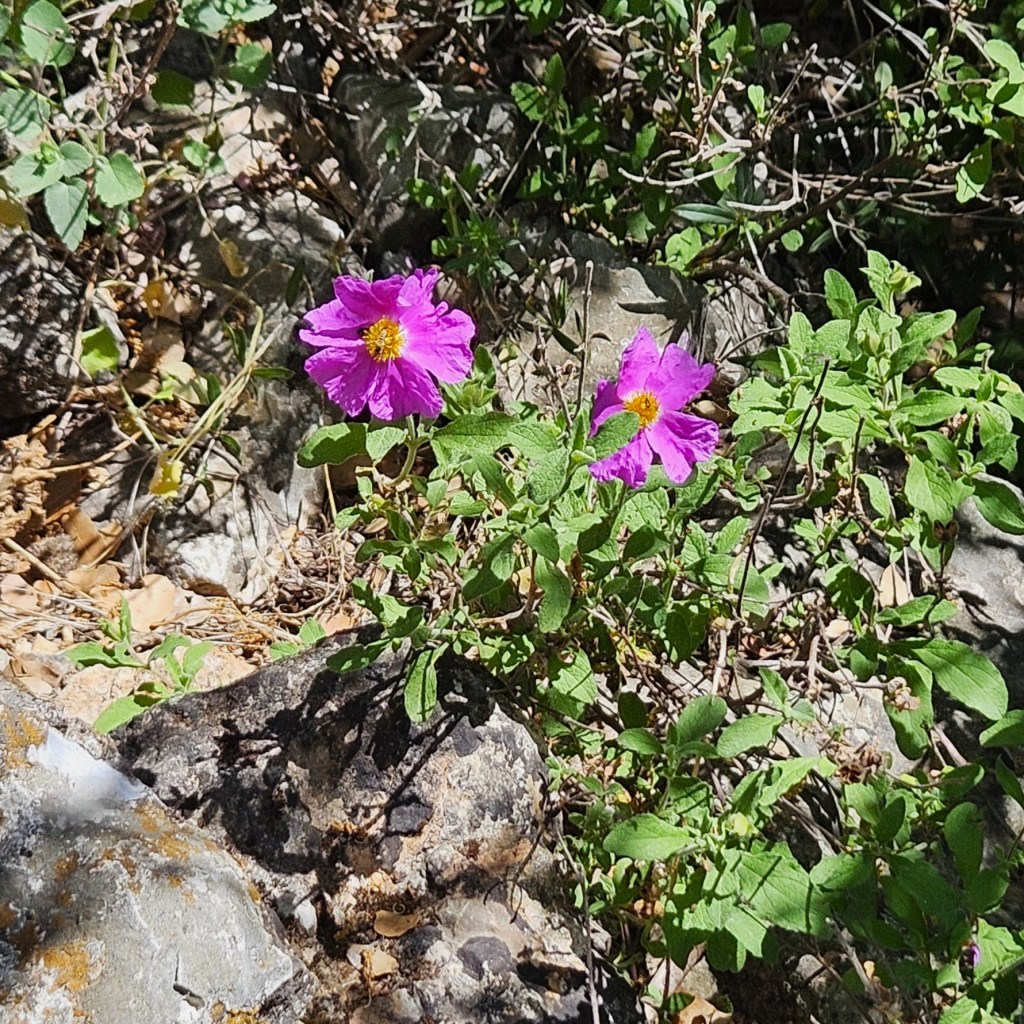
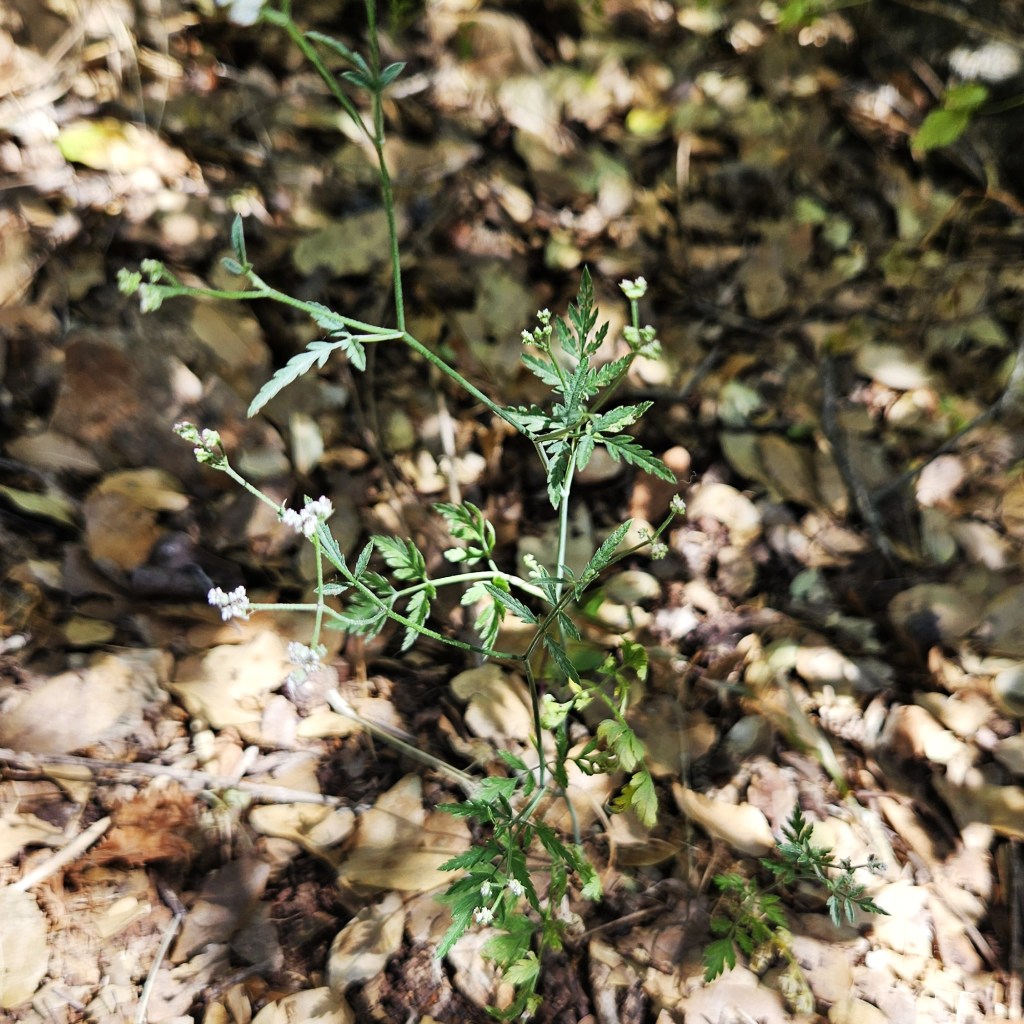
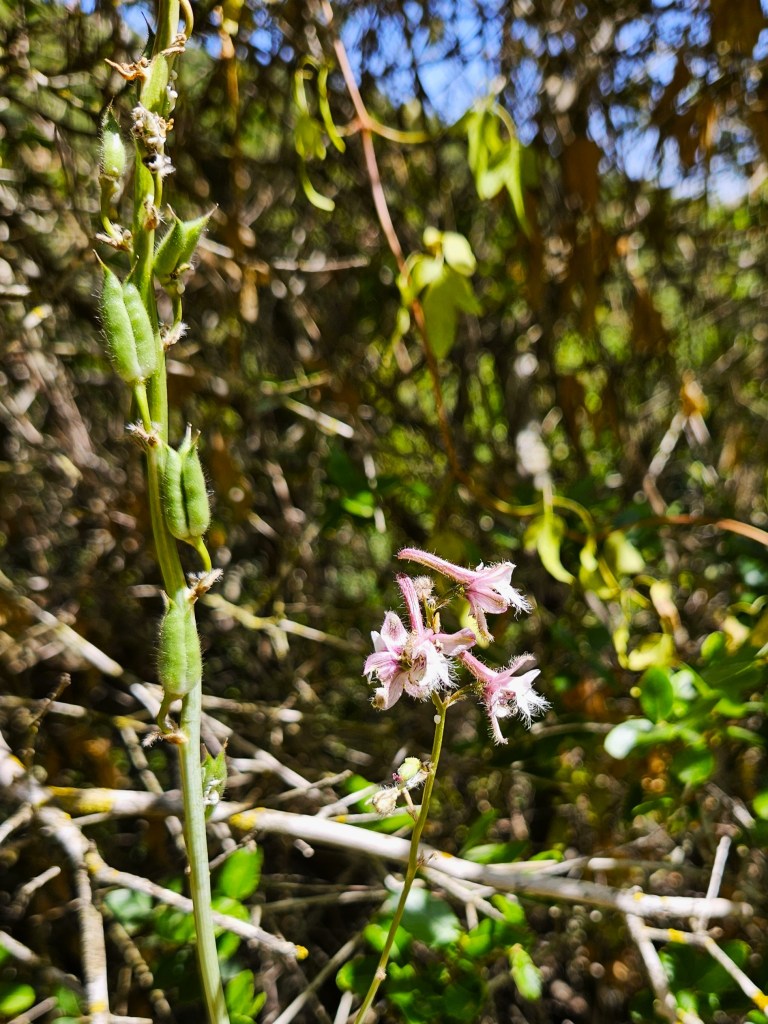
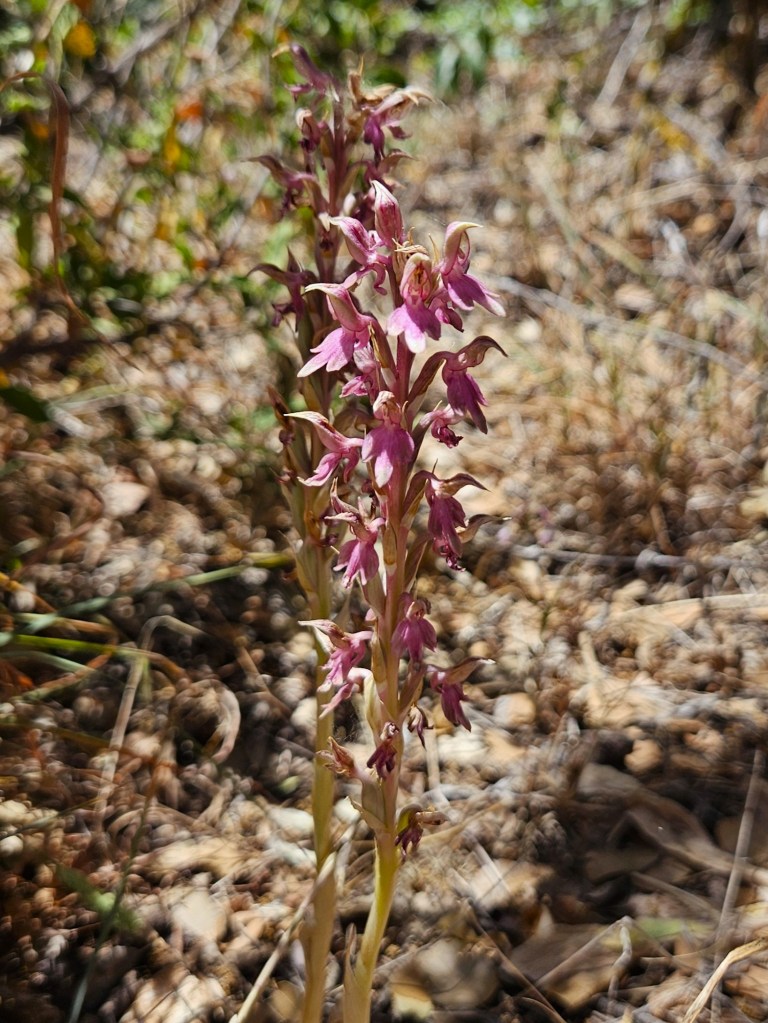
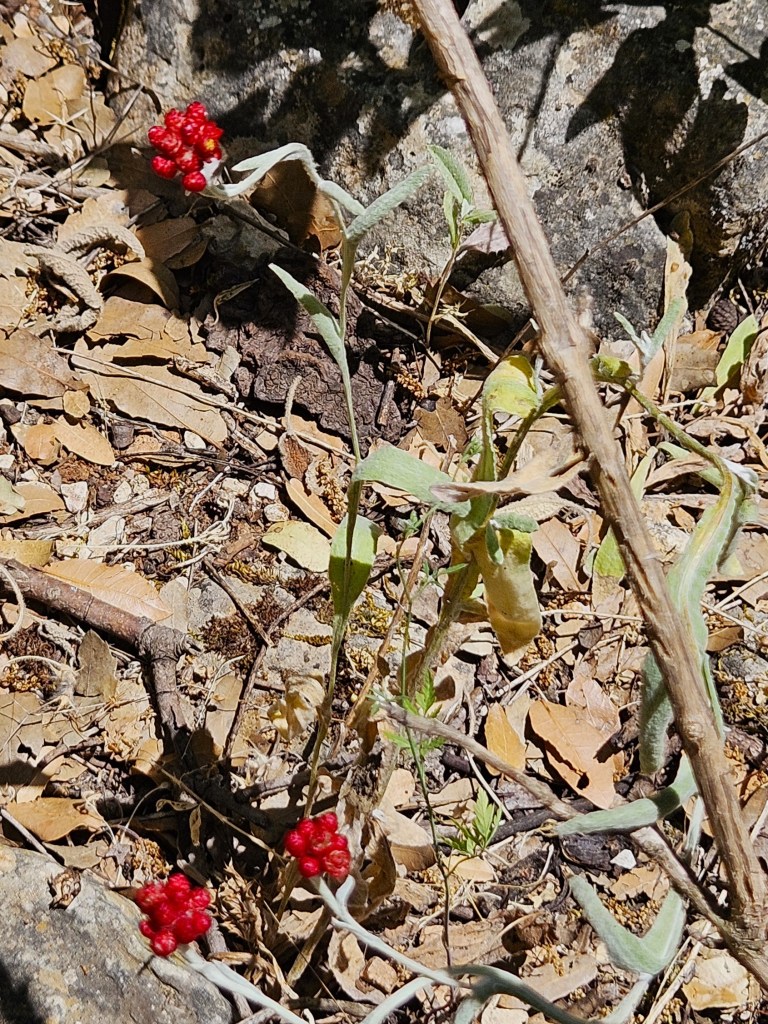
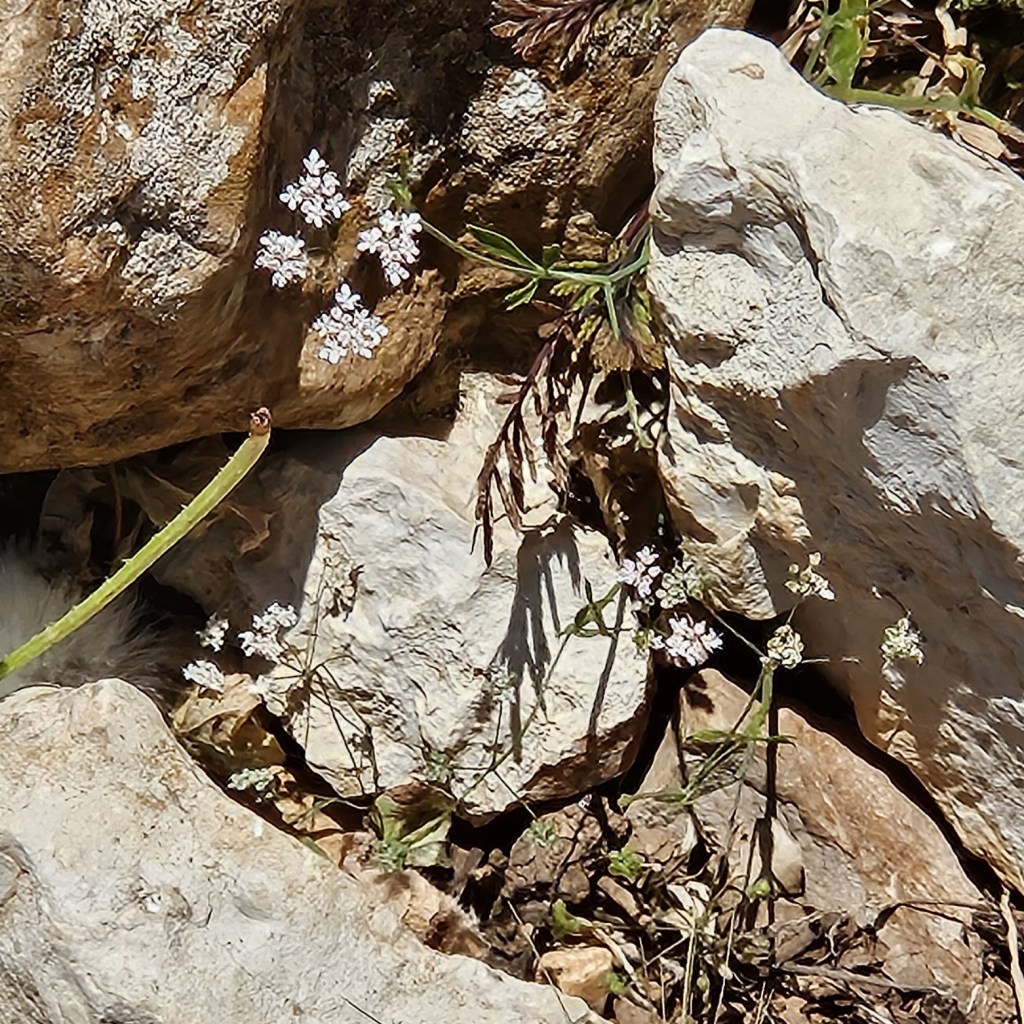
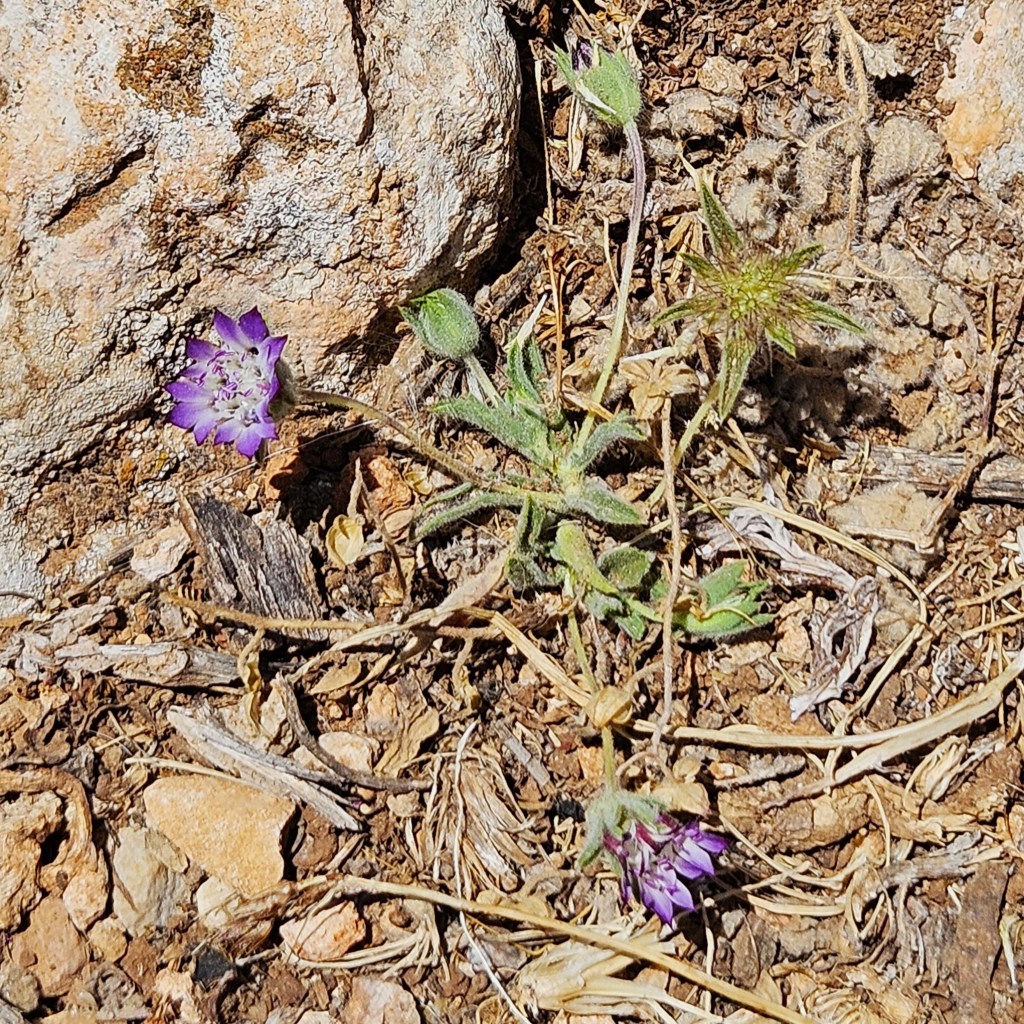
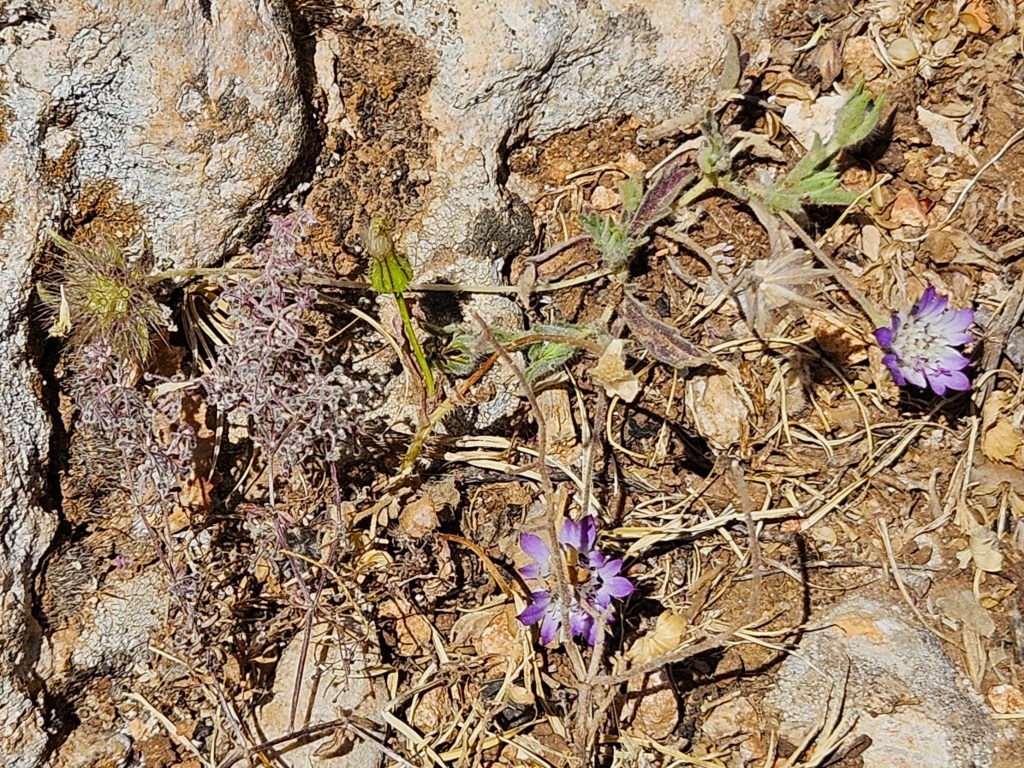
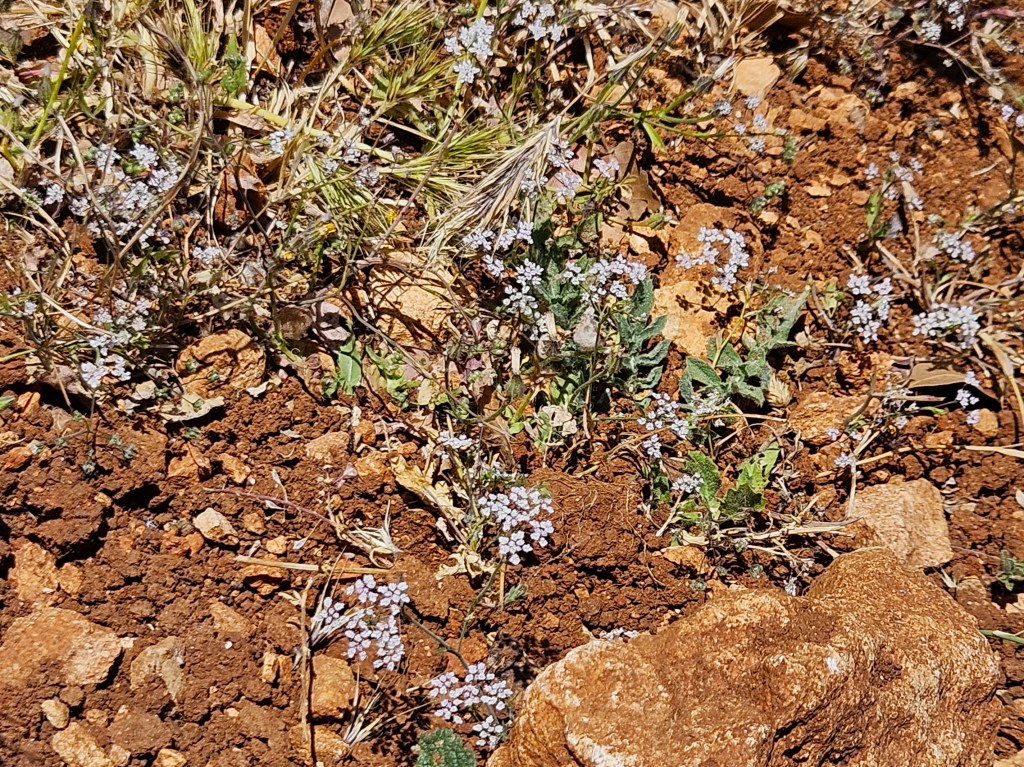
This was a popular trail this weekend. We’re at the end of the cooler springtime, and approaching the end of the wildflower season, both of which last longest in the Ajlun and Irbid highlands, but don’t last forever. We passed several groups of hikers, including one that our guide told us was a program for at-risk youth. We also encountered some locals – a few on horses, and a few herding goats.
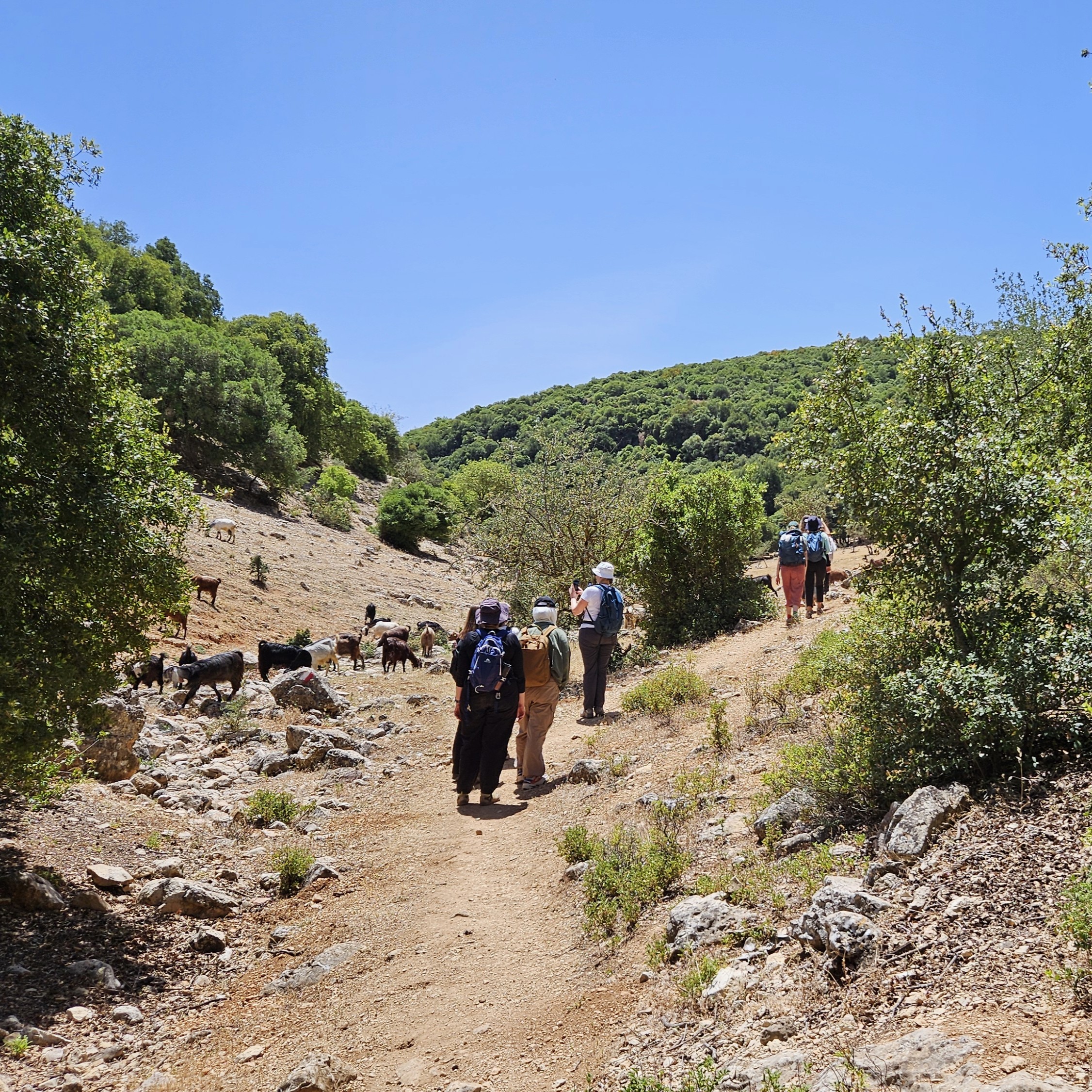
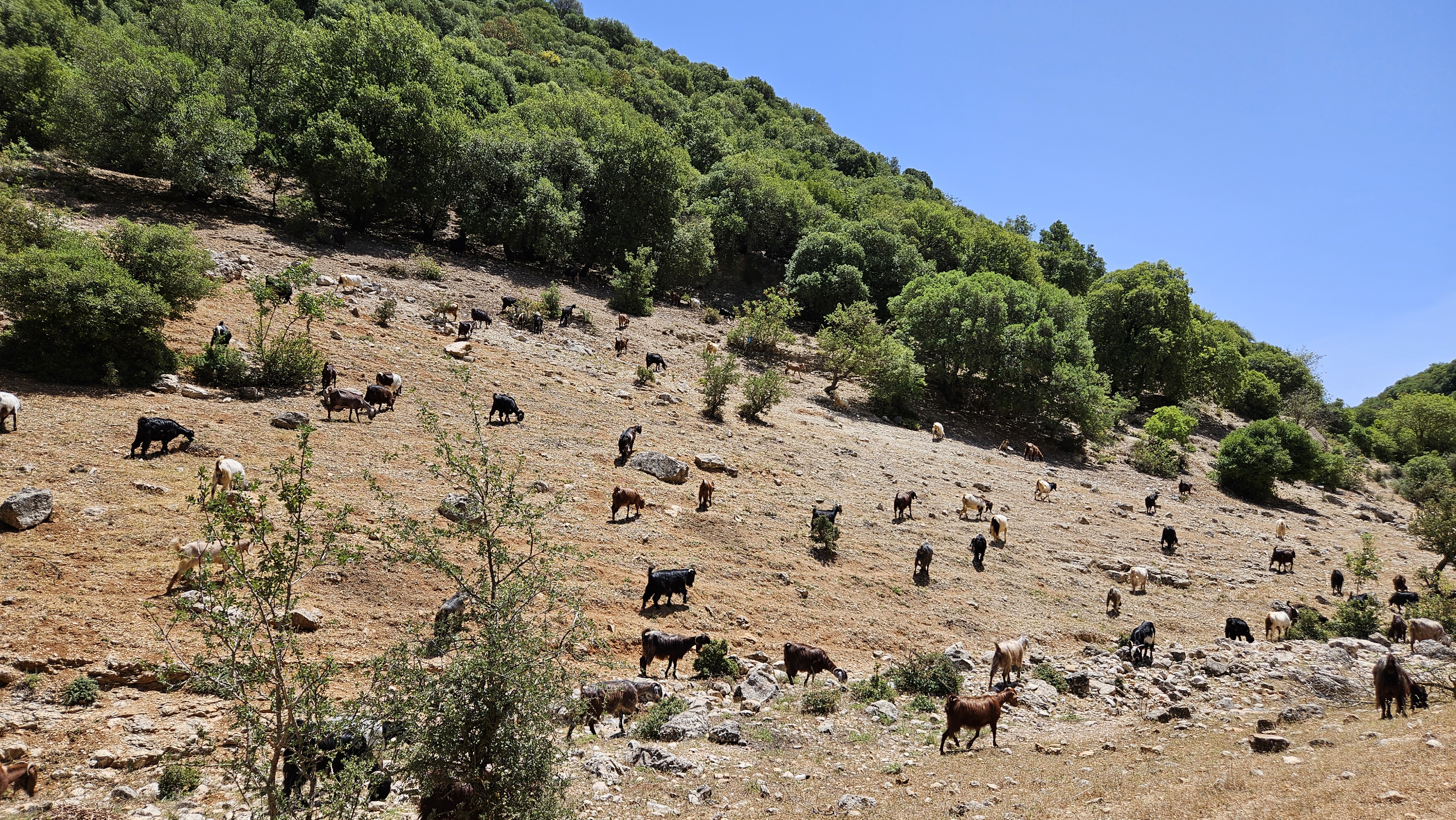
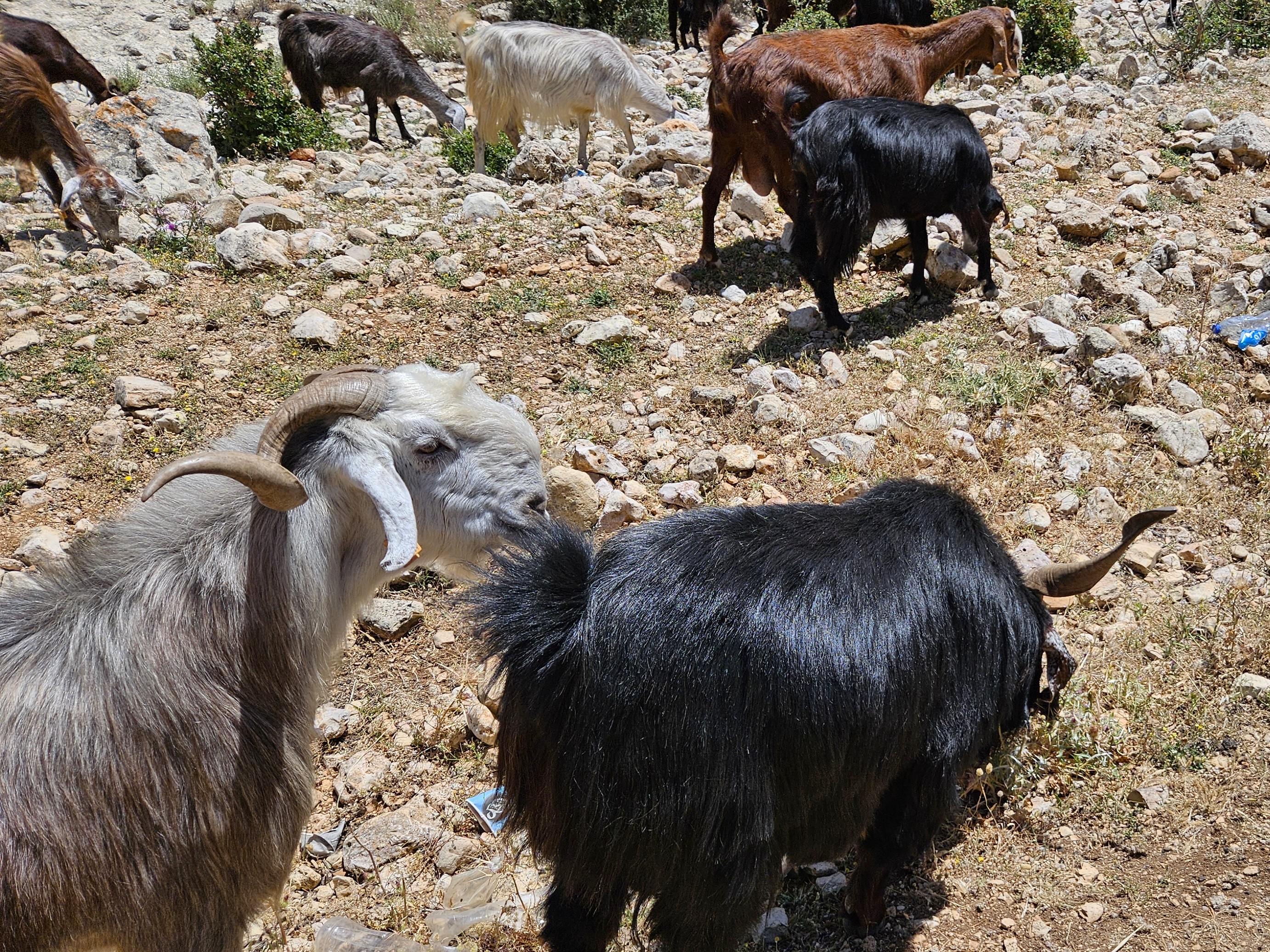
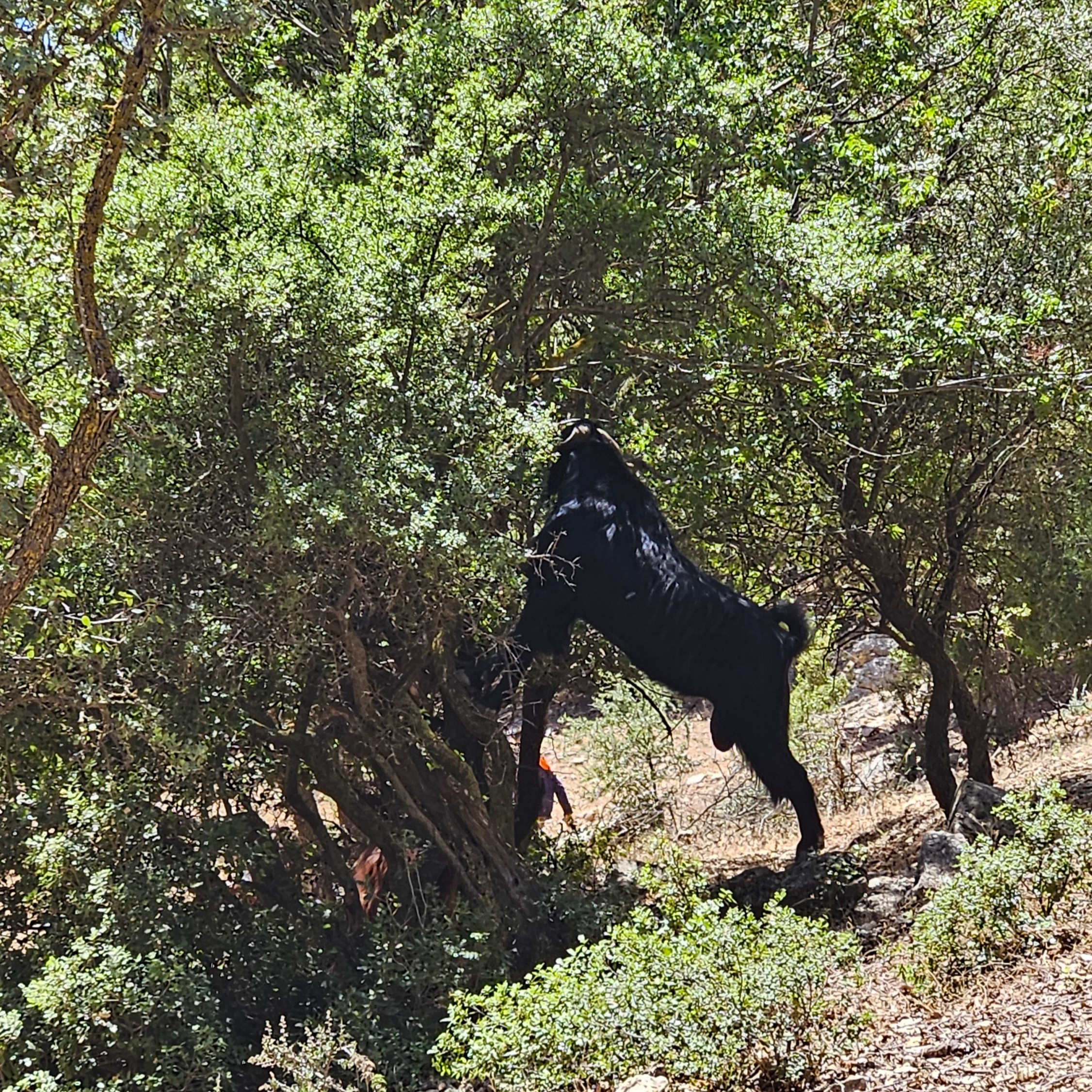
Of course, as they say in backpacking, altitude lost must then be regained. That’s when I really did slow down the group, on a very long upward slope. At the top, though, there’s a bit of a treat.
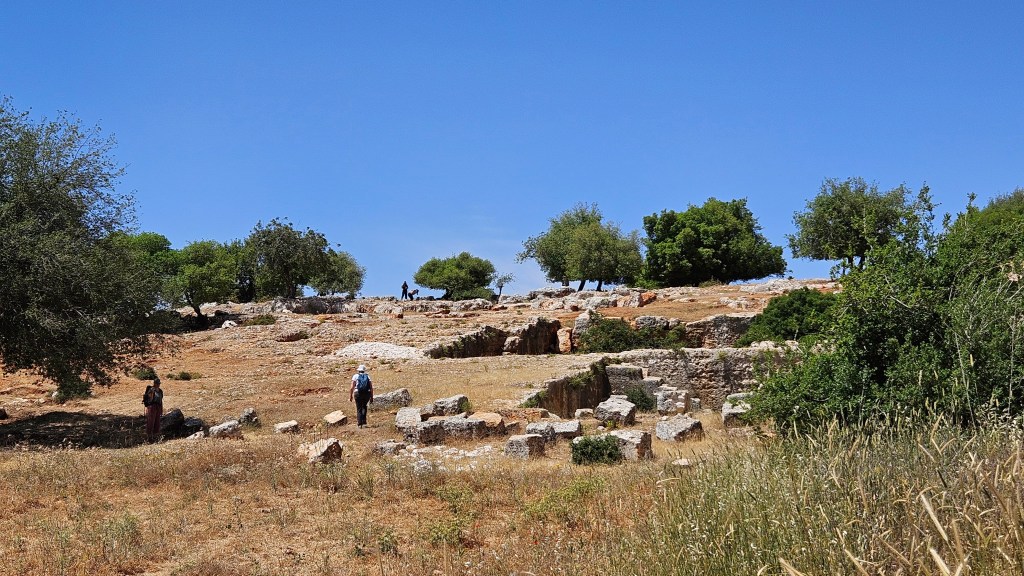
At the top of our culminating hill are the Qabla ruins. There are no explanatory signs, but it’s pretty clear that there are some stone quarries, with steps down, that may have been converted into cisterns. Other structures look like the foundations of buildings.
Tatreez with a View
Back on the bus, we headed for another spot in the Ajlun Forest, bumping up the kind of rough dirt road that Mr. Fellow usually takes me down for an adventure.
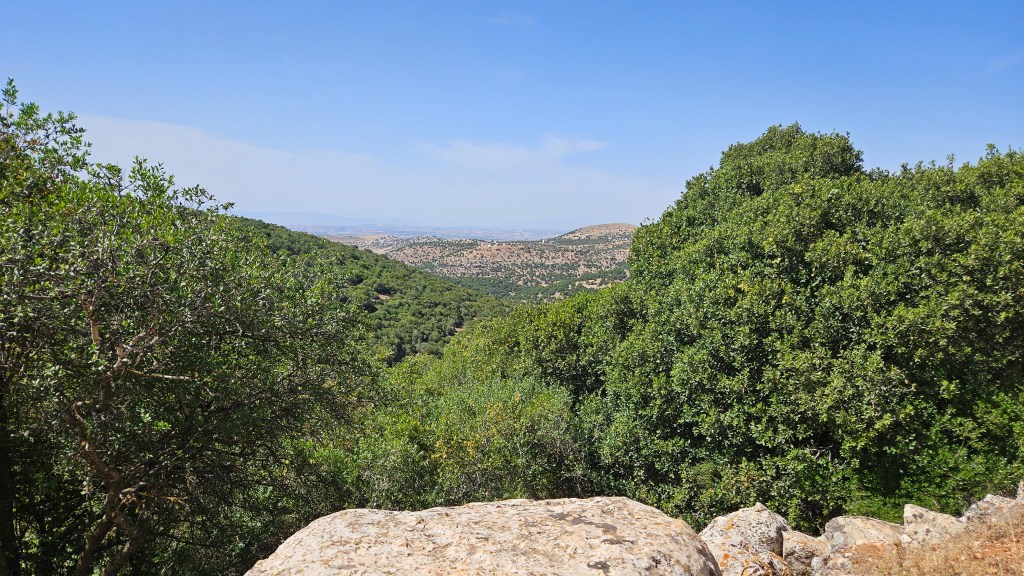
Once we found a nice view – all the way to Lake Tiberias, in fact! – we settled in to enjoy some coffee and traditional Palestinian cross-stitch known as Tatreez.
I’ve been doing cross-stitch for as long as I can remember, learned from my mother and her mother. My cousin is even more prodigious at it. As a little girl, I tended towards samplers like little Mary and Laura Ingalls would have done in their little houses in the Big Woods and on the Prairie. As an adult, I liked a European style of cross-stitch with pictorial images – flowers, cottages, my current project is a rooster in a French pastoral style – or fantasy themes like dragons.
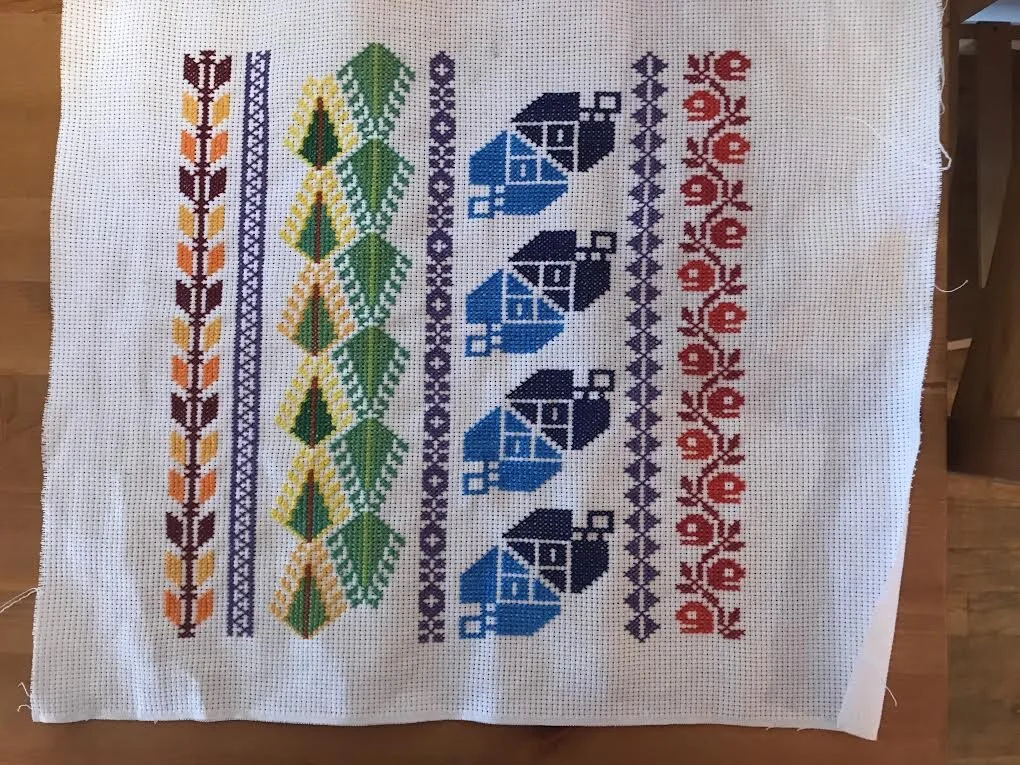
Palestinian embroidery tends to be more geometrical and highly symbolic.
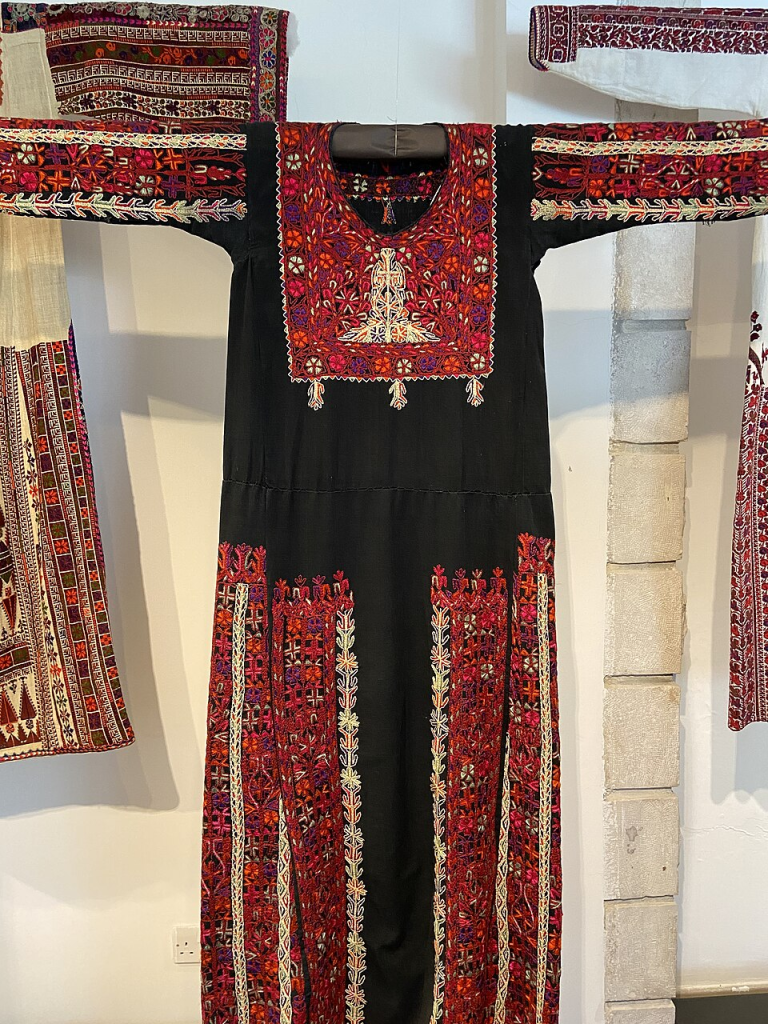
Tatreez designs use many motifs that are common throughout Middle Eastern and Mediterranean cultures such as birds, trees, stars, and geometric shapes. Over time, different regions of Palestine have developed their own unique styles and colors for those motifs, making it easier to identify where a piece was made.
Often stitched without a frame or hoop, using an open cheesecloth basted temporarily against the dress material to guide the stitches, embroidered dresses known as thobe are treasured family heirlooms across both Palestine and Jordan. I dream of someday being able to afford a hand-stitched thobe of my own.
Tatreez has long been something sold to tourists to Jordan. Machine-stitched embroidery has flooded the market, but authentic handmade projects are also prevalent. Small Tatreez-decorated items are something that women can easily do in their homes around homemaking and childrearing responsibilities, and nonprofits across the kingdom of Jordan have sponsored women’s collectives for Tatreez for decades.
What’s different living in Jordan this time is the renewed interest, especially among younger people, in learning to do Tatreez as a connection to the traditions of Jordanian and Palestinian cultural heritages. I think the big inflection point for Tatreez was the events following the attacks of Oct 7, 2023, but I suspect that day was just fuel on a fire that had been building for many years.
 MaryahConverse.com
Leave a comment